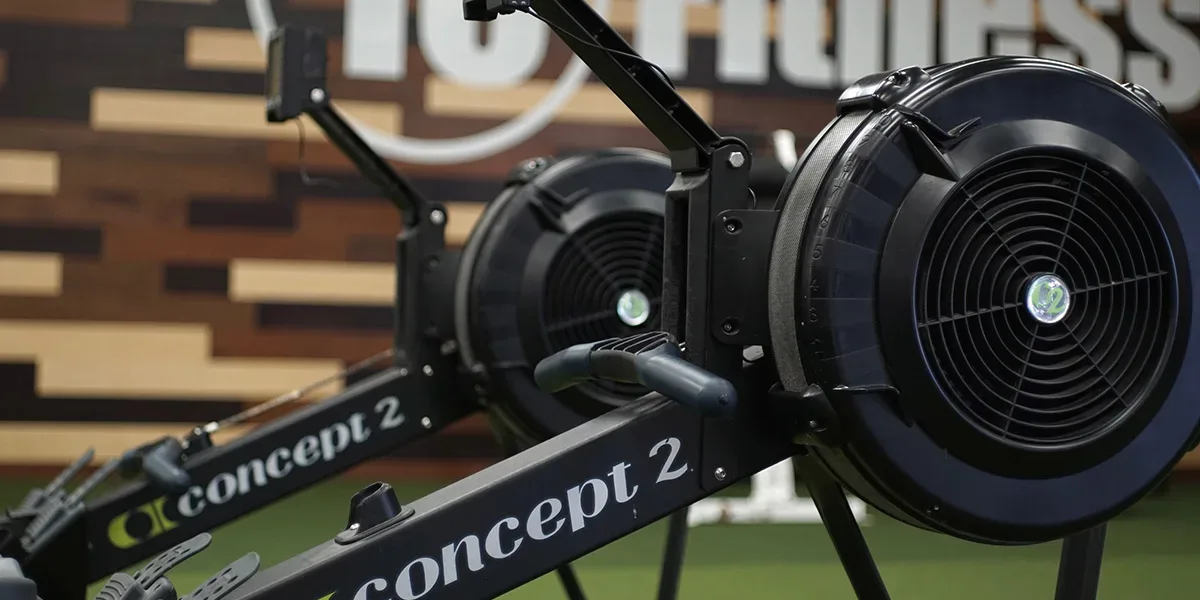
A rowing machine beginner workout is one of the best ways to start if you want a full-body workout that meets you exactly where you are. No experience required, no coordination test to pass, and no pressure to keep up with anyone else in the gym. If you searched for a rowing machine beginner workout near me, this plan works at any 10 Fitness location. If you need a starting point for building a broader routine around it, 10 Fitness Training has options worth exploring. You sit down, grab the handle, and go at your own pace. That is really all it takes to begin.
Key Takeaways
Why Rowing Works So Well for Beginners
Most beginners expect rowing to have a steep learning curve. It doesn’t. You get a full-body workout on your first pull, and nothing about your current fitness level locks you out. The resistance adjusts to however hard you push. You’re not fighting to keep up with the machine on day one.
That rowing machine sitting in the corner gets overlooked more than it deserves. It looks like it demands something from you before you even sit down: some background, a certain level of fitness, technique you haven’t learned yet. It doesn’t. The learning curve is maybe a day, and most of that day is just getting comfortable.
The flywheel makes a sound when you first pull, not loud, just a dry mechanical hum that rises with your effort and settles back when you release. Legs drive, handle comes in, seat rolls forward. You do it again. Somewhere around the third or fourth pull, the timing stops being something you think about. Your body finds it. Not because the form locked in perfectly, but because the rhythm stopped fighting you.
One pull and your legs, back, core, and arms all fire together. That coordination is the whole point. Rowing engages roughly 86% of your muscles per movement, which sounds like a lot, and it is, but it doesn’t mean you’ll be flattened after ten minutes. It means the work compounds. Your body gets more efficient faster than it would with most other exercises.
The movement has a built-in sequence. Your legs go first, generating about 60-65% of the power. Less of a pull, more of a push through the floor. Then your back and core stabilize through the middle, contributing about 25-30%. Your arms finish the pull, doing the least: only around 10-15% of the work. First-timers almost always expect it to be mostly arms. It isn’t. Your legs will do things you didn’t expect.
What makes rowing genuinely good for beginners is that your current fitness level doesn’t put a ceiling on your first session. You control the resistance. You control the pace. There’s no minimum speed to hit, no one grading your form on day one. It’s a low-impact cardio workout that keeps your joints out of the equation while still giving your heart and muscles something real to work with.
Everyone fumbles the first pull. That’s not a bad sign, it’s just how it goes. Start with the resistance low, strap your feet in, and slow down enough to actually notice what’s happening: your legs push first, your torso tilts back second, and your arms finish last. Three things in that order, every single stroke. It sounds like a lot until it doesn’t, and that usually happens somewhere around the 300-meter mark when it all stops being a checklist and starts being motion. Once the machine feels like yours, what it can do for your body starts to matter.
What Rowing Does for Your Body
Rowing works your cardio, burns real calories, and stays easy on your joints, all in the same pull. Most workouts give you one or two of those things. Rowing consistently delivers all three.
Most cardio asks you to pick your poison: run hard and wreck your joints, or go easy and wonder if it’s doing anything. Rowing doesn’t really work that way. It pulls your legs, back, and arms into the same motion at the same time, gets your heart genuinely working, and manages to do all of it without grinding you down. Wherever you’re starting from (first week back, complete beginner, somewhere in between), it’s the kind of workout that actually fits.
Calorie Burn That Adds Up
You know how a 30-minute run can leave your knees and hips feeling it for the rest of the day? Rowing gives you similar calorie burn without that cost. Healthline puts it at around 255 calories in 30 minutes for a 125-pound person, and that number climbs with body weight and effort. It’s a meaningful return on half an hour, and your joints aren’t paying the price for it.
Cardiovascular Results You Will Actually Feel
Consistent rowing makes your heart and lungs measurably stronger. A 2023 study in the European Journal of Applied Physiology followed people through 12 weeks of rowing and found that peak oxygen consumption increased by 16%, and peak power output by 27%. Here’s what that actually looks like in real life: you hit the top of a flight of stairs and you’re fine. Not winded, not gripping the railing. Just fine. You carry groceries in from the car in one load and still have enough left to start dinner. That’s your heart and lungs getting stronger together, every session, quietly compounding.
Easy on Your Joints, Hard on Your Fitness
Rowing is low-impact cardio with no jarring force on your knees, hips, or ankles. The Cleveland Clinic confirms it directly. If you’ve got joint sensitivity, you’re coming back from an injury, or you just want cardio you can actually stick with long-term, that matters more than it might seem at first. You can row hard and still walk normally tomorrow. For more on keeping your joints happy while staying active, check out 10 Fitness’s guide to low-impact cardio workouts.
And beyond the cardio and calorie burn, rowing builds real full-body strength, pulls your posture into better alignment, and has a steady, rhythmic quality that a lot of people find surprisingly calming. It’s the kind of workout that clears your head while it works your body.
Why Different Goals Still Fit the Rower
Rowing changes how you feel in your body, and it usually happens before you notice it’s happening. Your glutes, thighs, back, and arms all show up in the same movement. Strength builds across your whole body at once, not just in the one area you remembered to train.
A few weeks in, you might find yourself standing up straighter without thinking about it, or realizing the third floor doesn’t wind you the way it used to. If your goal is more energy on a Tuesday afternoon or something left in the tank when you get home, rowing builds that. Three sessions a week, and your body quietly starts adapting.
If you’re coming from strength training, the carry-over is direct. Rowing develops the posterior chain (glutes, hamstrings, back) that supports squats, deadlifts, and pretty much every compound lift you care about. It also counteracts the hunched, forward-leaning posture that creeps in after hours at a desk. And if you play recreational sports, the cardiovascular base you build means you’re performing better late in the game and recovering faster between sessions.
Point is, you don’t have to pick one goal and stick to it. The machine handles whatever you bring to it that day.
Beginner tip: Give yourself permission to go slow. Start with 10 to 15 minutes and put your attention on form, not how fast the numbers are moving. The rower actually punishes rushed, sloppy strokes more than it rewards speed, so those early sessions where you’re figuring out the timing? That’s not wasted time. You’re building the foundation that everything else sits on. Get the movement right first, and the speed will follow, which is exactly what we’re about to cover.
Learning the Stroke: Four Phases You’ll Use Every Time
There are four phases to every rowing stroke: catch, drive, finish, and recovery. The order you learn them is the order you’ll use them, and the part most people get wrong from the start is where the power comes from. It’s your legs, not your arms, and that sequencing changes everything.
You’ll hear those four phases named like a checklist. They’re not really four separate things yet, though. Not until your body stops treating them that way, and that won’t happen from reading or watching. It happens somewhere around the five hundredth repetition, maybe the thousandth, when your hands start moving before the thought does. Until then, break the movement into pieces on purpose. Work the catch until it bores you. Sit in the finish until rushing out of it feels wrong. That kind of ugly, deliberate repetition is exactly how coordination gets built.
The Catch is your starting position: knees bent, arms reaching forward, body tipped slightly from the hips. Coiled. Think of a sprinter in the blocks, energy loaded and ready. That’s what you’re going for.
The Drive is where you actually move the machine, and here’s what surprises almost everyone: it starts with your legs, not your arms. Your legs generate around 60% of the power in every single pull. Push them down first. Once they’re nearly straight, lean back just a little and draw the handle toward your lower chest. Arms come last. Every time. Nobody gets this right immediately. The instinct is to pull with your arms first, because that’s what it feels like you should do. Keep coming back to legs first.
The Finish: legs straight, handle drawn in, elbows back past your sides. Not a stop. More like landing. You’ll actually feel when the timing clicks before you could ever put it into words.
The Recovery is the whole stroke played backwards. Arms extend first, then you hinge forward from the hips, then your knees bend as you slide back toward the front of the machine. A lot of beginners mentally clock out here, like it’s just getting back into position. It’s not. This is when you breathe, reset, and actually prepare for the next pull. Rush it or ignore it and you’ll feel that sloppiness compound on itself, usually right around rep twenty.
A few patterns show up constantly with new rowers. Better to name them now:
- Your arms will try to go first every single time. Let your legs push down before you pull anything, or you’re leaving most of your power on the floor.
- Rushing back to the catch robs you of your only rest window in the stroke. Slow the slide. Breathe.
- At the catch, your back rounds when it should hinge. The movement comes from your hips, not your spine, and keeping that distinction clear is what keeps you rowing without pain six months from now.
Once the stroke starts to click, the next variable to understand is the machine itself.
The Best Resistance Setting When You’re Starting Out
If you’re just starting out, set the damper to 3. Somewhere between 3 and 5 is the right range for most beginners, and honestly, that’s all you need to know right now.
New rowers almost always crank the damper up. Higher feels harder, and harder feels like progress. What you actually get is a sluggish, grinding pull that has nothing to do with effort and everything to do with load. Your form breaks down before you’ve had any real chance to find it. The damper is not a difficulty dial.
ACE Fitness puts the beginner sweet spot at 3 to 5 for exactly this reason. When you’re still learning the movement, you want the machine working with you, not against you. Smooth and controlled beats grinding through every pull.
Stroke rate matters here too. Stroke rate is how many pulls you take per minute (SPM), and 22 to 24 SPM is a solid starting point. As your form clicks into place, bring the stroke rate up before you ever touch the damper. Form comes first. Intensity follows.

Your First Four Weeks on the Rower
Start simple: two short sessions a week, a damper set to 3, and your full attention on form. Four weeks is enough to go from uncertain about every stroke to feeling like you actually belong on a rowing machine. Sessions start short on purpose, because your body needs time to get the movement into muscle memory before you pile on intensity. Consistency is the whole game those first weeks, not how hard you push.
Week 1: Build the Habit (2 sessions)
Keep it short and focus entirely on your stroke. Set the damper to 3 and aim for a stroke rate around 22 SPM.
- 5 minutes easy rowing (focus on form, not speed)
- 3 rounds: 2 minutes at moderate effort, 1 minute complete rest
- 5 minutes easy cool-down
Total time: about 21 minutes. If your form starts slipping before the interval wraps up, cut it short. Bad habits set in fast when you grind through sloppy strokes.
Week 2: Build Your Base (2-3 sessions)
The movement’s starting to click now, so Week 2 is about building some endurance on top of that foundation. Keep the damper at 3-4 and your stroke rate in the 22-24 SPM range, same as before. Open each session with about 5 minutes easy, just enough to get loose, then settle into 15-18 minutes at a pace where you could actually hold a conversation. Not a monologue, but a real back-and-forth. If you’re down to single words between gasps, back off a little on either the pace or the resistance. Close out with 3-5 minutes easy to let your heart rate come down.
Week 3: Add Some Structure (3 sessions)
Week 3 is where you start playing with intervals, and that structure is what makes later rows feel more manageable. Set the damper to 3-4 and aim for a stroke rate of 24-26 SPM.
- 5 minutes easy warm-up
- Alternate 3 minutes at moderate effort with 2 minutes easy rowing, repeated 3-4 times
- 5 minutes cool-down
Keep total session time somewhere in the 20-25 minute range. Your body is still adapting to the recovery demands of interval work, and that’s actually the whole point right now. Those adaptations are what make longer rows start to feel manageable instead of miserable.
Week 4: Push a Little (3 sessions)
Longer sessions, controlled effort, damper at 3-4, stroke rate 24-28 SPM. Choose your format: Option A is 25-30 minutes steady state at a pace that feels challenging but sustainable. Option B is 20 minutes of intervals (3 minutes moderate, 2 minutes easy, repeat). By the end of Week 4, the stroke starts to click.
If you want the plan adjusted to where you are starting from, a 10 Fitness trainer can dial it in to fit your current fitness level and goals.
The rowing part is done. What you do in the ten minutes after your session can make a bigger difference than most people expect.
What to Do When You Finish Your First Session
After a rowing workout, cool down with 3 to 5 minutes of easy rowing, then stretch the major muscle groups you just used.
Most people have already mentally checked out by the time they finish their last pull. Your body hasn’t. Drop the damper to 2 and keep moving at 16 to 18 strokes per minute, easy, for three to five minutes. That’s what lets your heart rate step down instead of just falling off a cliff the second you stop.
Once you’re off the machine, spend a few minutes on the areas rowing actually loads: hip flexors, hamstrings, upper back, and shoulders. Even five minutes matters more than you’d think. The difference shows up the next morning when you’re not shuffling to the coffee maker. This stretches-for-sore-muscles guide walks you through a full routine if you want something to follow.
Try a Rowing Machine Workout at 10 Fitness in Little Rock
Every Arkansas 10 Fitness location has rowing machines, and they’re open 24/7, so there’s no wrong time to show up and try one. In the Little Rock area, you’ve got three options depending on where you’re coming from. 10 Fitness Cantrell at 6823 Cantrell Rd, Little Rock, AR 72207 has a beginner-friendly floor layout with cardio equipment right next to the rowers, which makes the whole thing feel a lot less intimidating. 10 Fitness University at 6221 Colonel Glenn Rd b, Little Rock, AR 72204 works well for students and anyone on the south side of the city. And if you work downtown, 10 Fitness Downtown at 300 River Market Ave is right there. New to the gym, new to rowing: it doesn’t matter. You belong here either way. Check out all the gym amenities at 10 Fitness to see what comes with your membership.
Not sure which location is closest? Use our gym finder to find your home club.
Not Sure You’re Using the Machine Correctly?
A single session with a 10 Fitness personal trainer can correct your technique and set you up with a personalized plan. Rowing has a learning curve, and good habits are easier to build correctly from the start than to unlearn later. A nationally certified trainer can clean up your form, tailor a plan to your actual goals, and make sure you’re not grinding through workouts that aren’t clicking. It’s less about needing a trainer and more about getting where you’re going without the detours.
Frequently Asked Questions
Is a rowing machine good for beginners?
Yes, and probably more so than most other machines. There’s no coordination barrier, no minimum fitness level, and nothing you need to figure out before your first session. You set the resistance to whatever feels manageable. Your joints stay happy because there’s no impact. It’s about as low-barrier as cardio gets.
What resistance should I start with?
The lever on the side of the flywheel cage, the damper, set it between 3 and 5. Works like shifting gears on a bike. And here’s the thing people get backwards: higher doesn’t mean harder. Not automatically. That 3-5 range is where beginners actually build something, because you can get a smooth, consistent pull going without fighting the machine every single stroke.
Damper’s set. Now watch the Performance Monitor for “s/m” and keep your strokes somewhere around 22 to 24 per minute. Feels too easy? Don’t touch the lever. Push harder through your legs. The rower runs on wind, so the force you put in is the resistance you get back. The lever just controls airflow. Everything else is on you.
How long should a beginner row?
Start with 10 to 15 minutes, including warm-up and cool-down. That’s genuinely enough. Stick with it for 3 to 4 weeks, and you’ll find yourself naturally stretching into 20 to 30-minute sessions. Consistency beats duration every time.
Where can I find a rowing machine near me?
Every 10 Fitness location in Arkansas has rowing machines on the floor, and they’re open 24/7. Little Rock, Conway, Jonesboro: wherever you are in the state, there’s a location close by. Walk in anytime and get started.

Ready to Get on the Rower?
You’ve got everything you need. Rowing works for every body, every fitness level, and every starting point. Whether this is your first gym visit ever or you’re just shaking up your routine, the rower doesn’t care where you’re coming from. It just meets you there. Grab a 10 Fitness membership and you’ll have access to rowing machines at every Arkansas location, 24 hours a day, 7 days a week. Start where you are. The rest takes care of itself, and we’ll be right here with you.