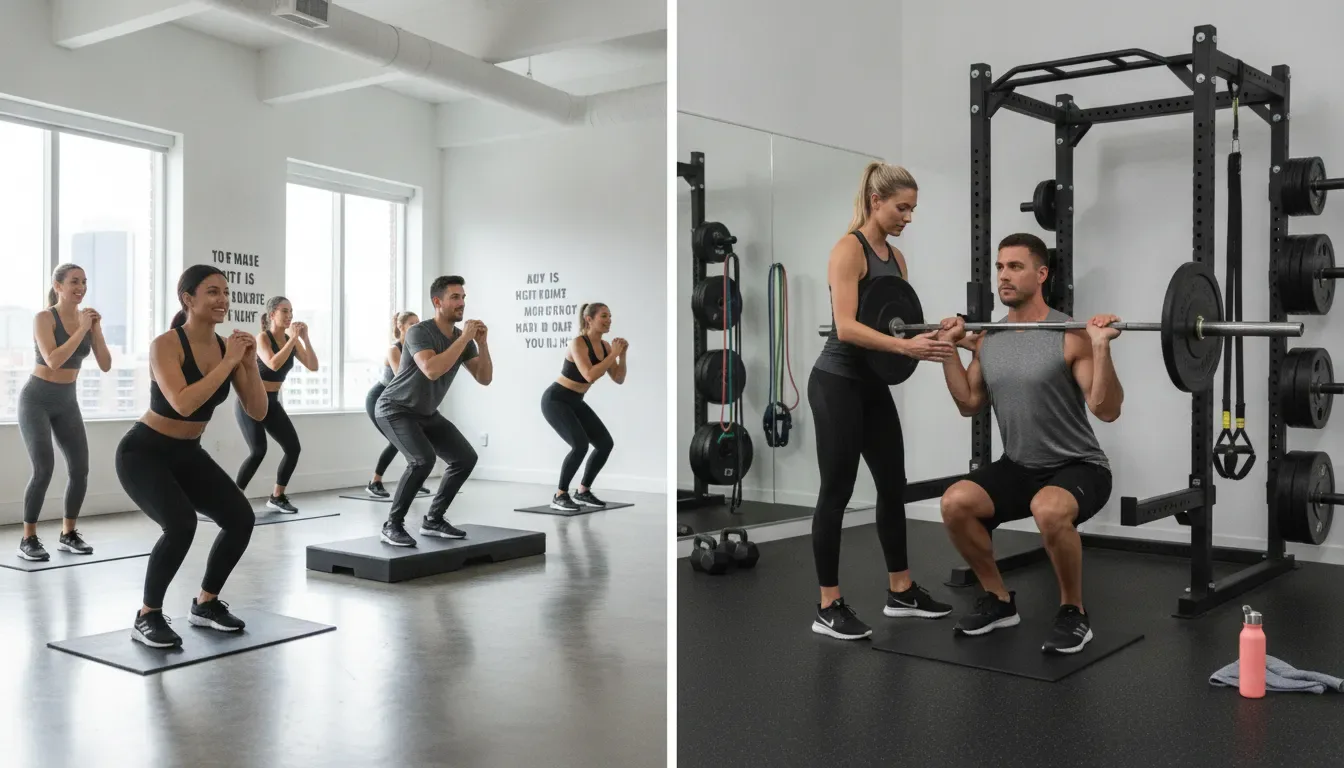
Your workout should support your life, not create another source of pressure. That’s why the choice between group fitness classes vs personal training depends on what helps you feel comfortable and committed. A group class may give you a clear plan when you have limited time and do not want to decide what to do next. Personal training may feel better when you want detailed instruction, movement modifications, or a program tailored to your current abilities. You can start with one format and change as your goals develop. Ahead, we’ll compare the coaching, community, cost, flexibility, and support each option provides.
Key Takeaways
- Match coaching to your needs: Choose group classes for instructor-led structure and community, or personal training for individualized guidance and feedback.
- Prioritize consistency over perfection: Select workout times, pricing, and session formats that fit your schedule, budget, experience, and comfort level.
- Combine options as your goals change: Use personal training to learn technique or address specific needs, then add group classes for variety, accountability, and connection.
Compare Group Fitness Classes and Personal Training
Group fitness classes and personal training can both help you build strength, stay consistent, and feel more confident at the gym. The better option depends on how you prefer to learn, what you want to achieve, and how much guidance you need during each workout.
Group classes offer a planned workout, instructor guidance, and the shared energy of other members. Personal training offers one-on-one coaching and a program built around your goals, experience, and physical needs. You do not have to choose one format permanently. Many members use both as their schedules, goals, and confidence change.
Join instructor-led workouts with shared energy
Group fitness classes give you structure without asking you to plan every exercise. An instructor demonstrates the movements, explains the workout, and guides you from the warm-up through the cooldown. That structure can help you stay focused, especially when you have limited time or are not sure what to do next.
You also get encouragement from the people around you. A class can feel motivating without becoming competitive. You can work at your own pace while benefiting from the music, timing, and energy in the room. Research on physical activity preferences among young adults found that many people ages 18 to 39 prefer group activities because they combine exercise with a social setting.
A group class may suit you if you enjoy variety, scheduled workouts, and the feeling of showing up with a team.
Get one-on-one coaching and personalized programming
Personal training gives you dedicated time with a fitness professional who can build a program around your goals, fitness level, movement history, and preferences. Instead of completing the same workout as everyone else, you receive exercises selected for your current needs.
This approach can help if you are new to strength training, preparing for a performance goal, or returning to exercise after time away. Your trainer can explain each movement, adjust the difficulty, and answer questions as they come up. A personalized training program can also make each session feel more purposeful because it connects to a larger plan.
Personal training may be a strong fit if you prefer focused attention, a quieter setting, or clear direction each time you work out.
Compare class size, pace, equipment, and session structure
The main difference between group classes and personal training is how closely the workout can be tailored to you. In a class, the instructor plans one session for several members. You may use shared equipment, follow set intervals, and move at the class pace. Instructors can offer alternatives, but they may not have time to redesign every movement for each person.
Personal training follows a more flexible structure. Your session can change based on your energy, experience, goals, and performance that day. You may spend extra time practicing technique, use specific equipment, or take longer rest periods when needed. As Fitness Together explains, managing a larger class can limit the amount of form correction and exercise adjustment an instructor provides.
If you like a clear plan and steady momentum, a class may feel natural. If you want the workout to adjust around you, personal training may be a better match.
Get movement modifications, form feedback, and progress tracking
Both formats can support safe, effective exercise, but personal training allows more time for individual feedback. Your trainer can watch how you move, explain technique, and adjust an exercise when it feels uncomfortable or does not match your current ability. They can also help you choose appropriate weights, repetitions, and rest periods.
In a group class, the instructor can demonstrate modifications and offer general coaching as you work. You are still responsible for speaking up when a movement does not feel right and choosing the version that fits your body. A supportive instructor will encourage control and good technique rather than asking you to push past your limits.
Personal training may be especially helpful if you have mobility restrictions, a previous injury, or concerns about technique. Trainers can modify exercises and provide form feedback while helping you track changes over time. Progress can include improved strength, balance, range of motion, endurance, and confidence, not just changes on a scale.
Access supportive coaching and adaptable workouts in both formats
You do not have to choose between support and independence. Group classes and personal training can both offer coaching, encouragement, and workouts that meet you where you are. The difference is how that support reaches you.
In a group class, encouragement comes from the instructor and your classmates. Seeing other members complete the same workout can help you stay committed, while the shared experience may make a challenging session feel more manageable. Group exercise can also create a sense of connection that makes the gym feel more welcoming.
Personal training gives you a closer coaching relationship. You can ask questions throughout the session, share concerns, and receive feedback based on your response to each exercise. Both classmates and trainers can provide support that helps you complete challenging workouts and stay accountable.
At 10 Fitness, both options support confidence over comparison. You can modify movements, take breaks, and build consistency without matching anyone else’s pace.
Clear up common misconceptions about classes and personal training
A group class is not only for experienced gym members. Instructors can often offer beginner-friendly modifications, and you can choose lighter weights, lower-impact movements, or additional rest as you learn. You do not need to be the most energetic person in the room to belong. Showing up and participating at your level is enough.
Personal training is not only for athletes or people preparing for a major event. It can help beginners, busy adults, and people returning to exercise find a clear starting point. You do not need to arrive in perfect shape before working with a trainer. Building that foundation is part of the coaching process.
It is also a misconception that one format always works better than the other. Group classes can be motivating and enjoyable, while personal training provides more individual attention. The best choice is the one that makes regular exercise feel realistic, comfortable, and worthwhile for you.
Why Choose Personal Training Over Group Fitness Classes?
Group fitness classes offer shared energy and a set workout, but that structure is designed for everyone in the room. Personal training takes a different approach. Your trainer builds each session around your goals, experience, movement patterns, schedule, and comfort level.
That can make one-on-one coaching a strong choice if you want to improve your technique, prepare for a specific event, return to exercise, or feel more confident in the gym. You do not need to be an experienced athlete to get started. Personal training can help you learn the basics, establish a realistic routine, and understand how to use equipment safely.
It also gives you room to adjust as your needs change. Your trainer can modify an exercise when you feel tired, increase the challenge when you become stronger, or change your plan when your priorities shift. The result is a more focused experience that supports steady progress without asking you to match someone else’s pace.
Build a plan for strength, body composition, performance, or general fitness
A personal trainer begins by learning what you want to accomplish. You may want to build strength, change your body composition, improve athletic performance, increase your energy, or feel more comfortable using gym equipment. Your trainer can use those goals to create a practical plan for your current fitness level.
Rather than choosing exercises at random, you’ll understand how each part of your workout supports your priorities. Your plan may include resistance training, cardio, mobility work, and recovery. As you improve, your trainer can adjust the weights, repetitions, exercises, and rest periods. This individualized approach is a key difference between personal training and group fitness.
Improve form, technique, and confidence with real-time coaching
It can be difficult to know whether you’re performing an exercise correctly when you work out alone. A personal trainer watches your movement and offers feedback during each repetition. They can explain where to place your feet, how to brace your core, and how to control the movement from start to finish.
That guidance can make unfamiliar exercises feel less intimidating. You can ask questions as they come up and receive an explanation that makes sense for your experience level. Your trainer can also help you distinguish between normal effort and discomfort that may signal a problem. With consistent practice and real-time form corrections, you can build technique and confidence together.
Train at a pace that matches your experience and needs
Group classes usually follow a set schedule, which works well if you enjoy a quick transition from one exercise to the next. However, that pace can feel rushed when you’re new to exercise or returning after time away. You may still be learning one movement while the class has already moved on.
Personal training lets you take the time you need. Your trainer can slow down to explain a movement, repeat a skill, or give you more rest between sets. If an exercise feels too easy, they can make it more challenging. If it feels uncomfortable or confusing, they can offer a modification without interrupting anyone else’s workout.
This flexibility helps you focus on your own progress instead of comparing yourself with people at different experience levels. You can learn at your own pace while building habits that feel manageable.
Stay accountable and measure your progress
A scheduled session with a trainer creates a clear commitment. You know when you’re expected to show up, what you’ll work on, and who will support your effort. That accountability can help when your motivation changes from week to week or your schedule feels crowded.
Your trainer can also track details that are easy to overlook, including the weight you lift, the repetitions you complete, your technique, and how you feel during a workout. Progress is not limited to changes in appearance. You may notice that stairs feel easier, your balance improves, or you can complete an exercise with greater control.
Regular check-ins keep your program relevant. When you reach a milestone, your trainer can set a new challenge. If your energy, schedule, or goals change, they can adjust your plan. This ongoing support is a central benefit of personalized fitness programming.
Address mobility limits, past injuries, or a return to exercise
Personal training can be a useful option if you’re working around limited mobility, a previous injury, or a long break from exercise. Before you begin, share relevant health information with your trainer and follow guidance from your health care provider when necessary. A qualified trainer can then select exercises and modifications that fit your current abilities.
Your sessions may include a gradual warm-up, mobility work, strength exercises, and recovery periods. Your trainer can monitor how you move and make changes if an exercise does not feel right. That individual feedback may help you avoid rushing into movements that are too demanding for your current fitness level.
The goal is not to push through pain or prove how much you can tolerate. It is to rebuild trust in your body through steady, controlled practice. A trainer can correct technique and help prevent setbacks as you return to regular movement.
Get individual attention in a quieter setting
Some people enjoy the energy of a busy class. Others feel more comfortable with fewer distractions and less pressure. Personal training gives you the trainer’s full attention, so each session can focus on your movement, questions, and goals.
That individual support can help if you feel self-conscious in a group or prefer not to exercise at the same pace as everyone else. You can take time to set up equipment, review instructions, and request a modification without worrying about keeping up with the room.
A quieter setting does not mean your workout will lack encouragement. Your trainer can challenge you while respecting your limits and recognizing meaningful progress. At 10 Fitness, confidence matters more than comparison, so personal training gives you dedicated support as you become more comfortable showing up, learning, and getting stronger.
Why Choose Group Fitness Classes Over Personal Training?
Personal training offers dedicated attention and a plan built around your individual goals. Group fitness classes provide a different kind of support: instructor-led coaching, a set time to work out, and the encouragement that comes from exercising alongside other people. For many members, that shared experience makes fitness feel less intimidating and easier to maintain.
Group classes can also be a practical option if you want coaching without paying for one-on-one sessions. You follow a structured workout, learn how to perform different movements, and choose modifications that match your current ability. The instructor leads the room, but you remain in control of your pace and effort.
At 10 Fitness, classes are designed for real people with different schedules, experience levels, and goals. You can show up as a beginner, take breaks when needed, and build confidence over time. Here are a few reasons group fitness may be the right fit for you.
Find community, shared energy, and social motivation
A group class gives you more than a workout plan. It gives you familiar faces, an instructor who knows the format, and a supportive setting where everyone is working toward personal goals. You do not need to be the strongest or most experienced person in the room to feel included.
That shared energy can help you keep going when a workout becomes challenging. Research published in Frontiers in Public Health found that exercising with others can create a support system and encourage participants to complete difficult workouts. If motivation comes more naturally around other people, a class may suit you better than training alone.
Follow structured workouts that fit busy schedules
With a group class, the workout is already planned. You can arrive, follow the instructor’s guidance, and focus on your effort instead of deciding which exercises to do. That structure helps when your schedule is full or you tend to postpone workouts that do not have a set plan.
Many classes also fit into a predictable time block, making them easier to schedule around work, school, family responsibilities, and other commitments. Research on group fitness programming points to shorter class formats that meet changing member schedules. Booking a class turns exercise into a specific appointment, which can make following through feel more manageable.
Stay engaged with variety, music, and momentum
Repeating the same solo workout can become boring, especially when you are responsible for planning every detail. Group fitness classes add variety through different formats, exercises, music, and instructor styles. That change can help you stay interested while developing strength, endurance, mobility, or conditioning.
The pace of a class can also keep you focused. You follow a sequence, move with the group, and receive cues that tell you what comes next. Some classes use short intervals, while others focus on strength, cardio, mobility, or a combination of training styles. Group fitness research notes that younger members often prefer shorter workouts with social energy, which may appeal to anyone who wants efficient exercise without a repetitive routine.
Adapt movements to your fitness level
You do not need to reach a certain fitness level before joining a group class. A skilled instructor can offer movement options, allowing beginners to start with a manageable version while more experienced members choose a greater challenge. You can adjust your pace, resistance, range of motion, or rest time as needed.
Before class, let the instructor know about any concerns, especially if you are returning to exercise or have a movement limitation. Group classes provide structure and social support, while instructors can modify exercises as your ability changes, as explained in this comparison of group fitness and personal training. The goal is not to match the person beside you. It is to choose the version that helps you train safely and consistently.
Access coaching and accountability at a lower cost
Personal training can be valuable, but one-on-one sessions often cost more because you are paying for a trainer’s undivided attention. Group classes let you receive instructor guidance and exercise direction while sharing the session with other members. Memberships and class packages may also lower the average cost of each workout.
Classes create accountability in a simple way. You reserve a spot, arrive at a specific time, and have an instructor guiding the session. That routine can make it easier to follow through, particularly when self-directed workouts are easy to postpone. A comparison of personal training and group fitness also notes that group sessions are generally less expensive than one-on-one training.
Make regular exercise easier in a welcoming setting
Consistency often depends on whether your routine feels realistic and comfortable. A welcoming group class can remove some of the pressure that comes with figuring everything out alone. You can follow clear instructions, ask questions, and become more familiar with the gym and the people around you.
This approach reflects 10 Fitness’s focus on confidence over comparison. You can show up as a beginner, take breaks when needed, and make progress without competing with anyone else. Research on fitness preferences and gym participation also points to value and social connection as factors that influence people’s exercise choices. If you want support, structure, and a welcoming reason to keep showing up, group fitness classes may fit your routine well.
Compare the Costs of Group Fitness Classes and Personal Training
The lowest price is not always the best value. Think about how often you plan to work out, how much guidance you want, and which format will help you stay consistent. Group fitness classes typically share coaching costs among several members, while personal training gives you dedicated time with a trainer.
Both options can support meaningful progress. Group fitness is especially popular among younger adults, with Gen Z and Millennials making up 81% of fitness class participants nationally, according to fitness industry research. Your best choice should fit your budget, schedule, and comfort level.
Review membership, drop-in, and per-class pricing
Group fitness may be available through a monthly membership, class package, or drop-in fee. A monthly membership often offers better value if you plan to attend several times per week. A class pack or per-class option may work better if your schedule changes frequently.
Before you join, check what the price includes. Some memberships cover unlimited classes and gym access, while others limit the number of sessions each month. Ask about enrollment fees, cancellation policies, class pack expiration dates, and charges for missed reservations.
Estimate how many classes you will attend each month, then divide the total cost by that number. This gives you a realistic per-class price and helps you compare plans based on your actual routine.
Compare personal training rates, packages, and session frequency
Personal training rates can vary based on the trainer’s experience, session length, location, and package size. Buying several sessions at once may reduce the cost per appointment, but make sure you can use the package before its expiration date.
Your session frequency also affects your monthly budget. Weekly training provides regular feedback, while one or two sessions per month may be enough for technique checks or program updates. If you are new to strength training, a short series can teach you the basics before you continue independently.
Ask whether the package includes assessments, workout plans, progress reviews, or support between appointments. These details add value beyond the appointment itself. Personal training industry data can provide helpful context, but your goals and training needs should guide your decision.
Identify factors that affect your total fitness cost
Your total cost may include more than membership or session fees. Add transportation, parking, workout clothing, childcare, and any equipment or services you plan to use. A membership that costs slightly more may be worthwhile if the location is close to home or work and includes the equipment and classes you need.
Facility amenities can also affect pricing. Gyms with larger training areas, specialty equipment, indoor courts, and functional training spaces may charge more. Research on Millennial fitness preferences shows that interest in these features can increase as income rises.
Consider how likely you are to use the membership. A cheaper plan that you rarely visit may cost more per workout than a plan you use consistently. Choose an environment that fits your lifestyle and removes as many barriers as possible.
Weigh each session’s cost against coaching and accountability
Group classes provide instruction, structure, and encouragement at a shared cost. You follow a planned workout, train alongside other members, and receive guidance from an instructor. Many classes also include movement modifications, so you can adjust exercises to match your experience and energy.
Personal training costs more per session because the program centers on your needs. Your trainer can adjust exercises, monitor your form, answer questions, and organize workouts around a specific goal. This support may be useful if you are learning new movements, returning after time away, or unsure how to plan your workouts. Individualized personal training can also provide accountability that helps you follow through.
Compare what each session gives you, not just the listed price. If personal coaching helps you train safely, avoid confusion, or stay consistent, the extra cost may be worthwhile.
Build a budget with classes, personal training, or both
Start with the amount you can comfortably spend each month. Then decide how many workouts you want to complete and which format will make that goal realistic. You might choose a group fitness membership for regular workouts and schedule one personal training session each month for technique feedback or program updates.
You could also begin with personal training, learn the fundamentals, and move into group classes for variety and community. Another option is to use more personal training during a busy season, then attend classes more often when your schedule settles.
List your expected monthly costs, including membership fees, training packages, transportation, and extra services. Revisit the plan after a few weeks. If you are not using the membership or want more individual guidance, adjust the mix. Combining both options can provide customized coaching alongside the variety and support of group fitness.
Match Your Training Format to Your Goals and Preferences
The best training format is the one that supports your goals and makes it easier to keep showing up. Group fitness classes and personal training can both help you build strength, improve energy, manage stress, and feel more confident. The right choice depends on how much guidance you need, how you prefer to exercise, and what you want your workouts to accomplish.
Your preferences matter, too. Some people feel motivated by music, coaching, and the energy of a room full of people. Others prefer a quieter setting where they can focus on their own pace and receive individual feedback. Research on physical activity preferences across age groups shows that people respond differently to exercise settings, so there is no single format that works for everyone.
Support general fitness, energy, stress management, and consistency
If your main goal is to move more often, either format can work well. Group classes give you a scheduled workout, clear structure, and an instructor who keeps the session moving. That setup can make exercise easier to fit into a busy week, especially when you do not want to plan each exercise yourself.
Personal training can support general fitness, too, particularly if you prefer a plan built around your current ability and schedule. A trainer can help you choose manageable exercises and gradually increase the challenge. For stress management, choose the setting that feels comfortable enough to repeat. Consistency matters more than choosing the most intense workout.
Work toward weight loss and body composition goals
Weight loss and body composition goals usually require a combination of strength training, cardiovascular exercise, nutrition, and consistent habits. Group classes make it easier to add variety, from strength-focused sessions to conditioning workouts, without creating your own routine. The support and structure can also help you stay engaged over time.
Personal training may be helpful if you want a plan that considers your experience, schedule, and progress. Your trainer can adjust exercises as your fitness changes and help you stay accountable. Fitness industry research shows that younger adults often prioritize both physical fitness and mental health, so choose an approach that supports your overall well-being, not just a number on the scale.
Develop strength, performance, and technique
Personal training is a strong choice if you want detailed coaching on lifting technique, exercise selection, or a specific performance goal. One-on-one instruction gives your trainer time to watch your movement closely, explain adjustments, and create a progression that matches your experience. This can be especially useful when you are learning compound exercises or preparing for a particular milestone.
Group classes can help you build strength and performance, as well. Strength-based formats offer a planned routine, instructor guidance, and the motivation that comes from training alongside other people. They can work well if you have some fitness experience but want more structure and accountability. Strength-focused group training is also a practical option for people who want coaching without training alone.
Build beginner confidence, modify movements, or return to exercise
Personal training can make your first workout feel less intimidating. Instead of guessing which equipment to use or wondering whether your form is correct, you can ask questions and receive clear feedback. A trainer can demonstrate each movement, adjust the difficulty, and help you build a routine that feels realistic.
Individual coaching can also support you if you are returning after time away, managing a mobility limitation, or working around a previous injury. Trainers can modify movements and provide form guidance to help you exercise with more confidence, as explained in this overview of personal training and movement modifications. Share relevant concerns before your session so your trainer can plan appropriately.
Choose between social motivation and independent pacing
Group classes are a natural choice if you enjoy exercising with other people. Shared effort, music, and instructor encouragement can make a workout feel more engaging. The group setting may also create a sense of commitment because other members and your instructor expect to see you in class. For many people, that connection makes regular exercise more enjoyable.
Personal training is better suited to people who prefer independent pacing. You can take more time to learn a movement, ask questions, or focus on a specific goal without comparing yourself with anyone else. If you feel distracted in a group or prefer one-on-one accountability, private coaching may be more comfortable. Both settings offer support, so consider where you are most likely to stay focused.
Get individualized support for specific needs and milestones
Personal training is often the best fit when you have a clearly defined milestone or need a plan built around you. That might include preparing for an event, improving a lift, rebuilding strength after a break, or learning how to train with a specific limitation. Your trainer can adjust your workouts as you progress instead of asking you to follow a fixed class plan.
Individual sessions also make it easier to track details such as strength, endurance, range of motion, and exercise technique. Customized programming and real-time feedback are key benefits of one-on-one personal training. If your needs change, tell your trainer so your sessions can change with them.
Fit Training Into Your Schedule and Motivation
The best workout plan is one you can follow consistently. That might mean an early morning class before work, a personal training appointment after school, or a short strength session during your lunch break. Your routine does not need to look like anyone else’s. It needs to fit your responsibilities, energy, experience, and goals.
Start by looking at your week as it is now. Write down your work or class schedule, commute, family commitments, and the times you usually feel most alert. Then choose realistic training windows instead of waiting for free time to appear. Research on physical activity preferences across demographic groups shows that younger adults often prefer flexible group classes and higher-intensity options that work with busy schedules.
Motivation becomes easier when your workout matches the way you like to train. Some people enjoy the momentum of a class, while others prefer individual coaching and a quieter setting. Some need a short, focused session, while others want a detailed plan with clear progress markers. Think about what makes exercise feel approachable, then choose a format that removes friction instead of adding pressure.
Small adjustments can also make a meaningful difference. Keep your gym bag ready, choose a location that fits your commute, and schedule recovery time alongside your workouts. If you miss a session, return to your next planned workout rather than treating it as a reason to stop. Consistency comes from creating a routine that works in real life, including busy weeks and changing priorities.
Choose fixed class times or one-on-one appointments
A fixed appointment gives your workout a clear place in your week. Group classes work well if you enjoy a set start time, instructor guidance, and the energy of training alongside other members. Once the class is on your calendar, you do not have to decide what to do when you arrive.
Personal training appointments offer the same structure with more individual attention. You and your trainer can choose a recurring time, then adjust each session around your goals and experience. If your availability changes often, ask about appointment options that offer flexibility. Research on exercise preferences highlights the value of formats that suit different lifestyles and routines.
Schedule workouts around work, school, and other commitments
Build your training plan around your actual week, not an ideal schedule. If mornings are busy, look for lunchtime or evening options. If your work hours change, choose several possible workout windows and use the one that fits best each day.
It can help to connect exercise with habits already in your routine. You might train after dropping off a child, before heading home from work, or directly after class. Start with two or three sessions you can attend regularly. That is more useful than planning five workouts that leave you exhausted or are difficult to maintain. A fitness programming guide recommends building schedules around member commitments rather than forcing everyone into the same routine.
Use digital scheduling, waitlists, and advance planning
Digital tools make it easier to protect time for exercise. Use your gym’s app or online system to view class times, reserve a spot, join a waitlist, and set reminders. Booking ahead makes your plan more concrete, especially when your week is full.
If a class is popular, join the waitlist instead of assuming you cannot attend. Keep a second option in mind in case your preferred session fills up. You can also prepare your clothes, water bottle, and gym bag the night before. These small steps reduce the number of decisions between you and your workout. Member app research connects convenient scheduling features with stronger participation among younger members.
Choose group energy or personal accountability
Group classes can make exercise feel more social and engaging. The music, instructor, and shared effort create momentum, while seeing familiar members can give you another reason to show up. If you enjoy encouragement and variety, a class may make regular training feel more natural.
Personal training offers a different kind of motivation. Your trainer knows your plan, watches your technique, and helps you stay focused from one session to the next. This can be especially helpful if you are new to exercise or tend to lose direction when training alone. Both formats provide support, so consider which type of accountability fits you best. Fitness participation research reports that Gen Z and Millennials represent a large share of fitness class participants, reflecting the appeal of group energy and connection.
Select short, focused workouts or fully customized sessions
You do not need hours at the gym to make progress. A short class can provide a focused workout when your schedule is tight. High-intensity sessions may suit you if you prefer efficient training, while strength, cycling, or mobility classes can help you focus on a specific type of movement.
Personal training gives you more control over the session. Your trainer can adjust the exercises, rest periods, and training volume based on your goals and current ability. You may spend more time improving a movement, building strength, or working around a limitation. Research on Millennial fitness preferences points to the appeal of short, effective workouts for people balancing exercise with busy daily lives.
Find an environment that supports confidence over comparison
Your surroundings can shape how comfortable you feel during a workout. Look for a gym where instructors explain movements clearly, trainers offer modifications, and members can work at different levels without feeling judged. A welcoming environment makes it easier to ask questions, try something new, and keep returning.
At 10 Fitness, the focus is on helping you feel stronger and more capable, not comparing your body or performance with someone else’s. Choose classes that match your experience, or work with a trainer who listens to your goals and adapts the plan. Research on fitness preferences suggests that supportive settings can strengthen motivation and confidence, especially when people feel comfortable participating at their own pace.
Combine Group Fitness Classes and Personal Training at 10 Fitness
You don’t have to choose between group fitness classes and personal training. At 10 Fitness, both options can play a useful role in your routine, depending on your goals, experience, schedule, and budget. Personal training gives you focused coaching and a plan built around your needs. Group classes add variety, structure, and the motivation that comes from working out alongside other members.
You can also change your approach as you grow. Start with one-on-one support while you learn the basics, add classes when you’re ready for more variety, or use both formats throughout the week. The right combination is the one that helps you feel comfortable, stay consistent, and make progress without comparing yourself to anyone else.
Start with personal training to learn technique and create a plan
Personal training can be a helpful starting point if you’re new to exercise, returning after time away, or unsure what to do at the gym. During a one-on-one session, your trainer can discuss your goals, experience, schedule, and any physical concerns. From there, they can create a workout plan that matches your current needs.
You’ll also receive real-time feedback as you learn exercises and use equipment. That guidance can help you build confidence, understand proper technique, and make each workout more purposeful. Personalized programming can also be adjusted as your fitness level and goals change.
Add group classes for variety, community, and conditioning
Once you feel more comfortable with basic movements, group fitness classes can add energy and variety to your week. An instructor leads the workout, so you can follow a clear structure without spending time planning every exercise. You’ll move through the warmup, workout, and cooldown with a group of people working toward their own goals.
Classes can also support cardiovascular fitness, strength, mobility, and overall conditioning, depending on the format. Try different options to find the workouts you enjoy most. The shared experience may make exercise feel more social and help you stay accountable. Group fitness research also points to community and shared motivation as key benefits of exercising with others.
Balance training days, recovery, and your budget
A combined routine should include enough recovery between demanding workouts. For example, you might schedule personal training once a week to focus on strength and technique, then attend one or two group classes on separate days. Keep at least some lighter days in your schedule, especially when you’re increasing your workout frequency.
Your budget matters, too. Group classes are often less expensive than one-on-one sessions, according to fitness industry research. You could use personal training for focused coaching while making group classes the regular part of your routine. Ask about membership options, personal training packages, and session frequency before choosing a plan. A routine you can afford is easier to maintain.
Use each format as your goals change
Your training mix can change as your confidence, schedule, and goals change. You might begin with several personal training sessions to learn technique, then add classes once you feel ready. Later, you may return to one-on-one coaching when you want to improve a specific lift, prepare for an event, or work through a new challenge.
Personal training can also help when your priorities shift. Your trainer may adjust your exercises, training volume, or weekly schedule as you get stronger or face new limitations. Adaptable personal training programs can keep your plan relevant instead of leaving you stuck with the same routine. Use group classes for momentum and variety, then choose personal training when you need more individual attention.
Reassess your coaching and accountability needs over time
Check in with yourself every few weeks. Are you attending workouts consistently? Do you feel confident performing the exercises? Are you enjoying your routine, or do you need more structure? Your answers can help you decide whether to add a personal training session, try a different class, or adjust your weekly schedule.
Your trainer can help you review what’s working and what needs to change. Your needs may shift with your work schedule, energy, fitness level, or goals. Effective group fitness programming should reflect the people attending it, rather than asking everyone to follow the same approach, as guidance on member-focused programming explains. Reassessing your routine helps you choose the coaching and accountability that support your next step.
Find Your Starting Point at 10 Fitness
Choosing between group fitness classes and personal training does not have to feel like a major decision. The best place to start depends on your goals, schedule, experience, and the kind of support that helps you stay consistent. You might enjoy the energy of a class, prefer the focus of one-on-one coaching, or find that a mix of both works best.
Begin by identifying what you want from your workouts. Maybe you want to build strength, improve your energy, feel more comfortable using gym equipment, or create a routine you can maintain around work, school, and other responsibilities. Your answer can help you choose a format that feels practical instead of overwhelming.
Think about how you prefer to learn, too. Some people enjoy following an instructor and moving with a group. Others feel more confident when a trainer explains each exercise, answers questions, and adjusts the session as needed. Neither option is right for everyone. The best choice is the one that makes showing up feel manageable.
Your preferences may also change over time. Research on physical activity preferences across demographic groups suggests that younger adults often enjoy social, higher-intensity activities, while other people prefer supervised or lower-impact exercise. Use those findings as general context, not a rule. Your comfort, goals, and daily life should guide your decision.
Explore group classes, schedules, and available equipment
Start by reviewing the group classes available at your 10 Fitness location. Pay attention to the schedule, workout style, class length, intensity, and equipment used. A strength-focused class may suit you if you want structured resistance training. A cardio-based class may feel more natural if you enjoy music, movement, and a faster pace.
Your schedule matters just as much as the workout itself. Look for classes before work, during a lunch break, or after your day ends. Choosing a time you can repeat each week makes attendance easier. You can also ask about the equipment used so you know what to expect before your first class.
Group workouts can provide structure, energy, and a sense of connection. Gen Z and millennials make up a large share of group fitness participants, according to fitness industry research. If you like working out alongside other people, a class may give you the extra motivation to keep coming back.
Discuss your goals, experience, limitations, and preferences with a trainer
A conversation with a trainer can help you choose a starting point that feels safe and realistic. Share what you want to accomplish, how often you have exercised, and any injuries, mobility concerns, or movements that feel uncomfortable. Mention what you enjoy, too. Your preferences matter because a plan you dislike can be difficult to maintain.
Personal training uses this information to shape workouts around your goals, fitness level, needs, and physical condition. A trainer may recommend specific exercises, demonstrate how to use equipment, or suggest whether individual sessions, group classes, or a combination would suit you.
You do not need to arrive with perfect knowledge or a detailed plan. Bring your questions and be honest about what feels challenging. This overview of personal training and group fitness explains how coaching can be adjusted to a client’s goals and experience. That conversation can help you make a confident choice before committing to a routine.
Compare the individualized support you need
Consider how much guidance you want during each workout. If you are new to strength training or unsure about your form, one-on-one coaching can provide clear instruction without the pressure of keeping up with a group. A trainer can watch your movement, offer real-time corrections, and adjust an exercise to match your current ability.
You may not need that level of attention for every session. Some people learn the basics with a trainer, then attend group classes for variety and accountability. Others prefer personal training during a specific phase, such as returning to exercise, working around a mobility limitation, or preparing for a performance goal.
Individual coaching can be useful when your workouts need to reflect your strengths, limitations, or progress. Trainers can adapt exercises during a session rather than asking you to follow a one-size-fits-all plan. This explanation of one-on-one personal training offers more detail on form feedback and individualized programming.
Start at a sustainable pace and track your progress
You do not need to train every day or finish every workout exhausted to make progress. Begin with a schedule that fits your life, whether that means one class each week, two strength sessions, or several shorter workouts. A manageable routine gives you space to build confidence without making exercise feel like another obligation.
Track simple markers that matter to you. You might record the workouts you complete, the weight you lift, how long you exercise, or how your energy and mood feel afterward. Progress can also mean using better form, taking fewer breaks, or feeling more comfortable in the gym.
A trainer can adjust your plan as your ability changes or new challenges come up. That flexibility helps you keep moving forward instead of starting over whenever your routine changes. Personal training programs are often updated as clients improve, which supports steady progress over time.
Choose the format that makes consistent movement easier
Ask yourself which option removes the most friction. If you like a set schedule, shared energy, and workouts led by an instructor, group fitness may make regular attendance easier. If you want privacy, detailed feedback, and a plan built around your needs, personal training may feel more comfortable.
Consider the practical details, too. Look at class times, appointment availability, travel time, and the amount of planning each format requires. The most effective option is often the one you can fit into an ordinary week, not just an ideal one.
You can also change your approach as your life and goals change. A group class may help you establish a routine, while personal training may be useful when you want to improve technique or work toward a specific milestone. At 10 Fitness, choose the format that helps you feel supported, move with confidence, and keep showing up.
Frequently Asked Questions
Is personal training better than group fitness classes?
Neither option is automatically better. Personal training may suit you if you want customized workouts, detailed form feedback, or support with a specific goal. Group classes may be a better fit if you enjoy scheduled workouts, instructor guidance, and the motivation of exercising with others.
Can beginners join group fitness classes?
Yes. You do not need advanced experience to attend a class. Tell the instructor that you are new, choose manageable weights or movement options, and take breaks when needed. The goal is to participate at a pace that feels appropriate for you.
How often should I work with a personal trainer?
That depends on your goals, budget, and experience. Weekly sessions can provide regular coaching and accountability, while occasional appointments may help with technique, program updates, or learning new exercises. You can also combine personal training with independent workouts or group classes.
Can I combine personal training and group fitness classes?
Absolutely. Personal training can help you learn technique and build a focused plan, while group classes can add variety, community, and structure to your week. Give your body enough recovery between challenging sessions and adjust your schedule as your needs change.
How do I choose the right option at 10 Fitness?
Consider your goals, schedule, preferred workout setting, and the amount of guidance you want. Group classes may work well if you enjoy shared energy and a set routine. Personal training may feel more comfortable if you want individual attention or have specific movement needs. You can also speak with a trainer and try both formats before deciding what fits best.