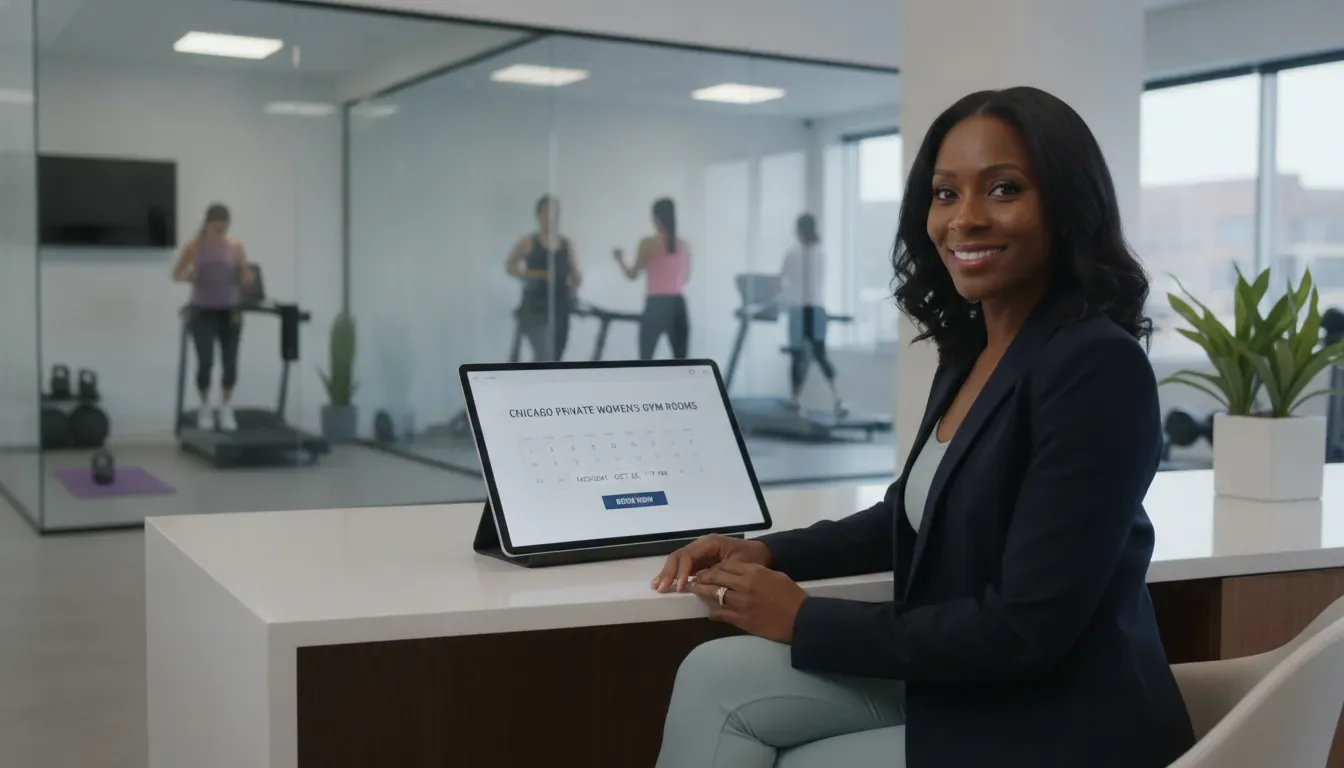
Your ideal gym may be quiet, flexible, and easy to reach. You may want enough space for strength training, a clean changing area, secure entry, and the freedom to work out without feeling watched. When you book a private gym room for women, you can create a session around your needs instead of adjusting to a crowded facility. Chicago has hourly studios, women-focused gyms, personal training spaces, and full-service clubs to consider. The best option depends on how often you train and what support you want. Learn how pricing, amenities, safety policies, and membership benefits compare before making your choice.
Key Takeaways
- Match the space to your workout: Compare equipment, privacy, location, room size, schedule, and coaching options before making a reservation.
- Review every booking detail: Confirm the total price, fees, cancellation rules, entry process, cleaning practices, camera policies, emergency information, and guest limits.
- Choose ongoing access when it fits your routine: If you train often, 10 Fitness may offer greater value through flexible gym access, classes, coaching, and a supportive community.
Why Should Women Book a Private Gym Room in Chicago?
A private gym room can make exercise feel more comfortable, focused, and easier to fit into your routine. Instead of planning around a busy gym floor, you can choose a space that suits your goals, schedule, and preferred level of privacy.
Chicago offers many options, from small rooms for individual training to larger studios for group workouts. You can book some spaces by the hour through platforms such as Peerspace’s Chicago fitness studio listings, while private gyms may offer memberships, coaching, or session packages. The best choice depends on how often you train, what equipment you need, and how much support you prefer.
Avoid crowd pressure and comparison
A private room lets you focus on your workout without a crowded floor competing for your attention. You may not need to wait for equipment, work around groups, or compare your pace with someone else’s. That extra space can make it easier to follow your plan, take rest breaks, and practice unfamiliar movements.
This setup may suit you if you feel uncomfortable exercising in front of other people or if you are returning to the gym after time away. You can pay attention to how your body feels rather than worrying about how you look. Services such as Gymshare offer private, distraction-free workout spaces for people who prefer a quieter training environment.
Privacy can also make practical parts of a workout feel easier. You can spend more time warming up, use lighter weights while learning a movement, or record your form without feeling watched. Those small freedoms can help you build confidence through consistent practice.
Choose training for your goals and experience
A private gym room can support many types of training, including strength work, cardio, mobility, functional movements, and personal training. Because the space is less crowded, you may have more time to focus on technique instead of rushing through a circuit or changing your plan when equipment is occupied.
If you are new to exercise, private training can provide a calmer setting for learning basic movements. If you have more experience, you can structure a session around a specific goal, such as improving your squat, building strength, or preparing for an event. Information about private gyms and personalized coaching highlights benefits such as specialized programs, smaller classes, and individualized support.
Before you book, confirm which equipment is included and whether a trainer is available. Some rooms are designed for independent workouts, while others include guided sessions. Choosing the right format helps you use your booking time well.
Find a comfortable, supportive space
Comfort matters when you are trying to make exercise part of your routine. A private room gives you more control over who is present, how your session is structured, and how much interaction you want. For many women, that can feel more relaxed than exercising on a large, open gym floor.
You may also prefer a women-focused gym or studio with small-group workouts and trainers who understand a range of women’s fitness needs. Some Chicago facilities emphasize supportive coaching and a less competitive atmosphere, including options featured in this guide to private gyms in Chicago.
Look for signs that the space welcomes different bodies, fitness levels, and abilities. Clear policies, respectful staff, clean equipment, and realistic photos can tell you a lot before you arrive. The right environment should help you focus on feeling stronger, rather than meeting someone else’s standard.
Work out around your schedule
An hourly room rental can work well when your schedule changes from week to week. You might book a session before work, during a lunch break, after school drop-off, or later in the evening. This flexibility can make exercise easier to maintain during busy periods.
Private rooms also suit workouts with a friend, trainer, or small group. If the venue allows guests, you may be able to share the booking and divide the cost. Hourly fitness studio rentals in Chicago average about $55, although prices vary by location, equipment, amenities, and time of day, according to Peerspace’s Chicago venue listings.
Review the minimum booking time, cancellation policy, and access instructions before you pay. Check for cleaning fees, deposits, and peak-hour pricing too. These details help you compare the actual cost and avoid surprises on the day of your workout.
Compare private rooms, women-only gyms, and full-service gyms
A private room may be the best fit when privacy, flexibility, and focused training matter most. You pay for a specific time and space, which can suit occasional workouts, personal training, or small-group sessions. It may also be useful if you want to try a new routine without committing to a long-term membership.
A women-only gym can offer a comfortable atmosphere along with ongoing access to equipment, classes, and a familiar community. A full-service gym may suit you better if you want a wider range of equipment, regular coaching, group classes, and access throughout the week.
Compare the complete experience, not only the hourly price. Think about how often you plan to train, whether you want a trainer, and whether you prefer independent workouts or community support. For consistent access, motivating classes, and a welcoming environment for every body, review 10 Fitness membership and gym options. For occasional or highly private sessions, an hourly room may be the better match.
How Can Women Compare and Book Private Gym Rooms in Chicago?
Booking a private gym room in Chicago starts with defining what you need from the space. A quiet room for solo strength training has different requirements than a studio for a small group, a personal training session, or a workout with a friend. Before comparing prices, consider your preferred neighborhood, equipment needs, schedule, privacy preferences, and comfort level.
It also helps to compare hourly rentals with full-service gym access. A private room can give you control over one specific workout, while a gym such as 10 Fitness may offer regular equipment access, classes, coaching, and a supportive community. The better option depends on whether you want occasional privacy or a consistent place to train.
Use the steps below to compare your options and avoid paying for services you do not need.
Compare 10 Fitness with hourly room rentals
An hourly private room can be a good choice when you need a quiet space for a particular workout, personal training session, content shoot, or small group. You select the room and time, then pay for that booking. This flexibility may suit you if you exercise occasionally or want to try a facility before choosing a regular gym.
A full-service gym offers a different experience. At 10 Fitness, members can use a variety of equipment, join motivating classes, and build a routine in a welcoming space. You do not need to reserve a separate room for every workout, which can make regular training simpler.
Think about how often you plan to exercise, whether you want coaching, and how much equipment you need. If you expect to train several times a week, consistent gym access may provide better value than booking a private room repeatedly.
Search gym websites and venue marketplaces
Search local gym websites and venue marketplaces to find the widest range of options. Gym websites may list private studios, personal training areas, women-focused programs, or small-group spaces that are not available through third-party platforms. Search terms such as “private gym room Chicago,” “women-only gym Chicago,” and “fitness studio rental Chicago” can help you build an initial list.
Venue marketplaces make it easier to compare several spaces at once. For example, Peerspace lists fitness studio venues in and around Chicago, with information about pricing, amenities, reviews, photos, and availability. You can filter listings by neighborhood, room size, and features such as mirrors, natural light, or strength equipment.
Save several promising listings rather than booking the first room you find. Then visit each gym’s website to check whether direct bookings include different policies, membership choices, or services.
Compare Peerspace, Gymshare, ClassPass, and Mindbody
Each platform serves a different purpose, so compare them based on the type of access you want. Peerspace is useful for finding private fitness studios by the hour, particularly when you need a specific location or set of amenities. Listings typically include photos, host information, prices, and house rules.
Gymshare focuses on access to private workout spaces and gyms, which may suit women who want more control over their surroundings. ClassPass and Mindbody are commonly used to discover fitness classes, appointments, studios, and wellness services. They may work well when you want a scheduled class or training session, but they do not always provide exclusive use of a room.
Before choosing a platform, confirm exactly what you are booking. You might be reserving the entire space, one spot in a class, or an appointment with a trainer. Check who handles payment, cancellations, entry instructions, and customer support.
Separate room rentals from classes, day passes, training, and memberships
A private room rental usually provides exclusive or limited access to a fitness space for a set period. It may not include a trainer, class, equipment setup, towels, or access to the rest of the facility. Read the listing closely so you understand what the booking covers.
A class reservation gives you one place in a group session. A day pass may allow access to a larger gym during certain hours. Personal training includes professional instruction, but the fee may cover only the trainer’s time rather than private use of the facility. A membership generally provides ongoing access, with classes or training sometimes charged separately.
For each option, write down the service, duration, number of guests, included equipment, and total price. This makes it easier to compare similar services and avoid choosing a low advertised rate that does not match the experience you want.
Check neighborhoods, transit, parking, and building access
Location affects whether a private gym room fits your routine. Chicago options can be found in areas such as Lincoln Park, Lake View, West Town, the Near North Side, South Loop, Logan Square, Bronzeville, and Jefferson Park. Start with neighborhoods that fit your daily schedule, then check travel times for the hours you plan to work out.
Look for nearby train stations, bus routes, bike storage, parking garages, and street parking rules. If you plan to visit before or after work, consider rush-hour traffic and parking availability. A room with a low hourly rate may cost more after parking or rideshare fees.
Building access matters, too. Ask whether the room is inside a larger gym, office building, or residential property. Confirm the entrance, elevator access, check-in process, and whether someone will meet you. Clear instructions can make your first visit much easier.
Review photos, policies, ratings, and host responses
Photos can help you decide whether a room suits your workout before you book. Look for images of the training area, equipment, flooring, mirrors, entrance, bathrooms, and changing spaces. Pay attention to open floor space, since a room may look larger in a wide-angle photo than it feels during an actual workout.
Read reviews for practical details such as cleanliness, noise, lighting, ventilation, equipment condition, and ease of entry. Reviews on Chicago fitness studio listings often mention helpful hosts, flexible layouts, natural light, and well-maintained equipment. Give more weight to recent reviews and repeated comments.
Host responses can also show how concerns are handled. A thoughtful response to a complaint suggests the host pays attention to the guest experience. If several reviewers mention the same problem and the host does not address it, ask about the issue before booking or choose another room.
Confirm capacity, availability, minimum booking times, and guest limits
Confirm the practical details before paying. Ask how many people the room can safely hold, whether guests count toward the limit, and whether everyone must sign a waiver. A room designed for one person may not work for a partner workout or small group, even if there appears to be enough floor space.
Check the calendar for your preferred date and time, then review the minimum rental period. Private fitness spaces commonly require one to five hours, and many bookings last about two hours. If you need only 45 minutes, a two-hour minimum can change the total value of the rental.
Ask about setup and cleanup time, too. Your reservation may begin when you enter and end when you leave, including equipment reset and gathering your belongings. Confirm whether late arrival reduces your workout time, whether you can extend the booking, and what happens if another guest arrives immediately afterward.
What Does It Cost to Book a Private Gym Room?
The cost of booking a private gym room in Chicago depends on more than the advertised hourly rate. Location, room size, equipment, booking time, and included services can all affect the final price. Before reserving a space, compare the complete cost with a gym membership, personal training package, or class pass.
A private room can be a practical choice for a one-time workout or small-group session. However, if you plan to exercise several times a week, consistent gym access may offer better value. Use the points below to compare your options clearly.
Use the $55 starting benchmark
Fitness studios in Chicago cost an average of about $55 per hour, according to Peerspace’s Chicago fitness studio listings. Treat this as a starting benchmark, not a guaranteed price. A smaller room with basic equipment may cost less, while a larger space with premium machines, mirrors, sound equipment, or a private entrance may cost more.
When comparing listings, check exactly what the hourly rate includes. One venue may provide mats, weights, towels, and water, while another may charge separately for each item. A lower rate may not be the better deal if you need to rent equipment or pay several additional fees. Comparing the full price helps you choose based on value, not just the headline rate.
Compare hourly rentals, memberships, and session packages
An hourly rental can work well for a one-time workout, a small-group session, or a specific training plan. It can also give you the chance to test a location before committing to a membership. This flexibility may appeal to people with changing schedules or those who travel between neighborhoods.
A membership may cost less per visit if you plan to work out several times each week. Session packages offer another option, giving you a set number of visits without requiring a long-term contract. Compare the cost per workout, access hours, equipment, amenities, and cancellation terms. For consistent access, a gym such as 10 Fitness may be more convenient than booking a private room for every workout.
Consider location, room size, equipment, and peak hours
A private room in a central neighborhood or near public transportation may cost more than one farther from downtown. Location matters if you plan to train before work, carry equipment, or visit after dark. Include parking, rideshare costs, and travel time when comparing prices.
Room size also affects the rate. A compact space may suit one person, while a larger studio gives a group or trainer more room to move. Check that the equipment matches your plan, including free weights, strength machines, cardio equipment, mats, and mobility tools. Ask whether evenings and weekends have higher rates. Some venues offer lower prices during off-peak hours, which may make regular bookings more affordable.
Check cleaning fees, deposits, and service charges
The advertised hourly rate may not be the amount charged to your card. Before booking, look for cleaning fees, refundable deposits, taxes, payment processing charges, and platform service fees. Some venues also have minimum booking times, so a 30-minute workout may still require a one-hour reservation.
Read the facility rules before paying. You may need to wipe down equipment, return weights, remove personal items, or leave the room in its original condition. Late departures, spills, or additional cleanup may result in extra charges. Peerspace recommends reviewing capacity, equipment, minimum booking times, and venue rules before confirming a reservation.
Ask about trainer, guest, towel, and equipment fees
A private room may not include every service or item you need. Ask whether you can bring a personal trainer, invite a guest, or work out with a small group. Some facilities charge per person, while others apply one flat room rate. Confirm the maximum capacity so everyone has enough space to exercise safely.
Also ask whether towels, lockers, water, resistance bands, mats, and specialty equipment are included. If you want personal training, find out whether the room has approved trainers and whether their rates cover program design, instruction, and equipment use. Getting these details in advance helps you avoid surprise charges and plan a workout that fits your budget.
Look for trial sessions and recurring-booking discounts
If you are unsure whether a room suits your routine, ask about a trial session or first-time booking rate. One visit lets you evaluate the equipment, cleanliness, privacy, check-in process, and overall comfort before paying for several sessions. It also gives you a chance to confirm that the room matches the listing photos.
Recurring bookings may lower the cost per visit. Some gyms offer discounts for longer commitments or off-peak use, according to private gym pricing research. Ask whether the discount applies to weekly reservations, multi-session packages, or a fixed schedule. Before purchasing, check whether sessions expire, can be rescheduled, or can be shared with another person.
Compare the final price and cancellation terms
Before you pay, request the final total in writing. It should include the room rate, taxes, deposits, service charges, and any trainer, guest, or equipment fees. Then review the cancellation and rescheduling policy. Some venues offer a full or partial refund with advance notice, while others keep the payment after a short cancellation window.
Ask when a deposit is returned and what happens if the host cancels or the room becomes unavailable. Chicago fitness facilities can have different refund policies, so do not rely on the listing headline alone. A slightly higher rate may be worthwhile if it includes flexible changes, dependable access, and the equipment you need.
Which Amenities Should Women Look for in a Private Gym Room?
The right private gym room should make your workout feel simple, comfortable, and focused. Start with the essentials: useful equipment, clean facilities, privacy, changing areas, and reliable access. Then consider extras that match your goals, such as personal training, recovery services, or a women-focused community.
Your ideal setup may look different from someone else’s. You might need a quiet room for strength training, enough space for a small group, or a convenient place to exercise before work. Use the checklist below to compare private gym rooms in Chicago and find a space that works for your routine.
Find strength, cardio, functional training, and mobility equipment
Check that the room includes the equipment you plan to use. Strength training may require dumbbells, barbells, racks, benches, cable machines, and weight plates. Cardio equipment could include treadmills, bikes, rowers, or ellipticals. For functional training, look for kettlebells, resistance bands, medicine balls, sleds, boxes, and suspension trainers.
The room should also have enough open floor space for warmups, stretching, and mobility exercises. A crowded layout can make basic movements feel awkward or unsafe. If you are new to the gym, ask whether staff can explain the equipment before your session. You can compare the setup with the activity recommendations from the Centers for Disease Control and Prevention.
Check for mats, mirrors, music, Wi-Fi, towels, and water
Small amenities can make a private workout more convenient. Mats support floor exercises, stretching, mobility drills, and cooldowns. Mirrors can help you check your form while learning a new movement, though they should not make the room feel overly exposed.
Ask whether the space provides towels, drinking water, Wi-Fi, speakers, or a way to connect your own playlist. If you follow a workout app or online class, reliable Wi-Fi and a phone stand can be useful. Check for charging outlets, too, and make sure there is a safe place to store your phone, keys, and other belongings during your session.
Assess cleanliness, ventilation, temperature, and equipment care
A private room should look clean and well maintained when you arrive. Check the floors, mats, benches, handles, mirrors, and other high-touch surfaces. Equipment should be free of excessive dust, sweat, rust, or visible damage. Ask how often the room is cleaned and whether disinfectant is available between bookings.
Ventilation matters during cardio and high-intensity workouts. Notice whether the room feels stuffy, unusually warm, or strongly scented. Ask about fans, air conditioning, filtration, and temperature controls if you are sensitive to heat or odors. The International Health, Racquet & Sportsclub Association also offers health and safety guidance that can help you decide what questions to ask.
Look for private bathrooms, showers, lockers, and changing areas
Think about what you need before and after your workout. A nearby restroom can be helpful during a longer session, while showers and changing areas are useful if you are heading directly to work, class, or another appointment. If lockers are available, ask whether they are included, whether you need to bring a lock, and how long you can use one.
Privacy matters in changing spaces. Look for doors that close securely, good lighting, clean surfaces, and enough room to change comfortably. Ask where your belongings can stay while you exercise. If the room is inside a larger facility, confirm whether your booking includes shared bathrooms, showers, or lockers, or whether those amenities cost extra.
Consider female trainers, small-group workouts, and personal training
A private gym room may offer more than equipment. You might be able to request a female trainer, schedule a one-on-one session, or bring a small group of friends. A trainer can create a plan around your experience, goals, schedule, and comfort level. This can be especially helpful if you are returning to exercise or learning strength training.
Ask about trainer qualifications, areas of experience, and whether consultations are available before you commit. If you prefer small-group workouts, confirm the maximum group size and how much coaching each person receives. At 10 Fitness, members can access equipment, classes, and support in a welcoming environment for different fitness levels.
Ask about corrective exercise and pre- and postnatal support
If you have an old injury, recurring discomfort, or movement limitations, ask whether the gym offers corrective exercise or referrals to qualified professionals. A trainer should not diagnose a medical condition, but they may be able to modify exercises and work alongside guidance from your doctor or physical therapist. Ask about the trainer’s experience with your specific needs before booking.
Those who are pregnant or recently gave birth should also ask about pre- and postnatal training. Support may include modified exercises, gradual progression, and clear communication with your health care provider. The American College of Obstetricians and Gynecologists provides general exercise guidance during pregnancy, but your own provider should guide decisions about your routine.
Explore mobility and recovery services, including fascial stretch therapy
Recovery amenities can complement your workouts, particularly if you sit for long periods, train often, or feel stiff after exercise. Ask whether the gym offers stretching sessions, mobility coaching, massage, foam rollers, recovery boots, or percussion tools. Find out which services are included and which require a separate fee.
Some private facilities also offer fascial stretch therapy, which generally involves assisted stretching intended to support mobility and range of motion. Ask who provides the service, what training they have, how long sessions last, and whether you should receive medical clearance for a specific condition. You can review general mobility resources from the American Council on Exercise before discussing your needs with a qualified professional.
Confirm room capacity, women-only access, and guest policies
Before booking, confirm how many people can safely use the room. A space that works well for one person may feel crowded with two or three people, especially when you add bags, equipment, and movement drills. Ask whether the listed capacity includes members, guests, trainers, or everyone in the room.
If women-only access matters to you, find out whether the entire facility follows that policy or whether it applies only to certain rooms, hours, or classes. Review guest rules, age limits, identification requirements, and waivers. Ask for the policies in writing so you know exactly what to expect and can compare facilities fairly.
Choose a community built on confidence over comparison
Amenities matter, but the atmosphere can influence whether you want to return. Look for a gym where staff treat members respectfully, explain policies clearly, and support different bodies, abilities, and experience levels. You should feel comfortable asking questions without worrying that someone will judge you.
Pay attention during a tour or trial visit. Do members have enough space to work out? Do trainers offer useful guidance instead of unsolicited criticism? Are the music, lighting, and layout comfortable? A supportive environment can make consistency easier because the gym feels like a place where you belong.
10 Fitness centers its approach on fitness for every body, with equipment, classes, and coaching for people at different starting points. When comparing private rooms, choose the space that helps you feel capable and comfortable, not simply the one with the longest amenities list.
Which Privacy and Safety Checks Matter Before Booking?
A private gym room should feel private, clean, and straightforward to use from the moment you arrive. Before paying, confirm how you will enter the building, who can access the room, and whether someone will be available if you need help. Attractive photos and a polished listing cannot answer these questions on their own.
Read the booking terms carefully and ask about anything that seems unclear. Check the room’s capacity, minimum booking time, permitted activities, equipment, and facility rules. These details vary between studios and rental platforms, so reviewing them ahead of time can prevent surprises. Peerspace’s Chicago fitness studio listings offer useful examples of venue details to compare.
Trust your instincts, too. If a host avoids direct questions about privacy, access, cleaning, or payment, consider another option. A safe booking process should give you clear information without pressure.
Confirm private entry and room access
Ask whether the room has a private entrance or whether you will walk through a shared lobby, training floor, or changing area. Confirm who can enter during your reservation, including staff, trainers, cleaners, other members, and the host. If you are booking for yourself or a small group, ask whether the door locks during your session and whether reservations can overlap.
Find out how access works before you arrive. The space may use a keypad, mobile app, lockbox, or staff check-in. Ask when you will receive the access code and whether it works only during your scheduled time. Private gyms and studio rentals may limit attendance, which can create a more comfortable setting for women who prefer fewer distractions and less crowd pressure. Compare private gym options in Chicago before choosing a space.
Ask about cameras, recording, photography, and changing-area privacy
Do not assume that “private” means camera-free. Ask whether security cameras monitor the entrance, hallway, workout room, bathroom, or changing area. The gym should explain where cameras are located and what they record. Cameras should not monitor bathrooms or changing spaces. Also ask whether staff, trainers, or other renters may take photos or record video during your reservation.
If you plan to change clothes at the facility, confirm that the changing area is fully private and not visible from the workout room or hallway. Ask about blinds, curtains, frosted windows, or glass doors. You should also review the personal filming policy. Some gyms allow workout videos, while others limit recording to protect everyone’s privacy.
Check lighting, controlled entry, staff availability, and common-area visibility
Pay attention to the areas outside the workout room. Well-lit entrances, hallways, parking areas, and exits make it easier to arrive and leave comfortably. Ask whether exterior doors stay locked, whether entry is controlled by a code or staff member, and whether someone is available during your reservation if the access system fails.
You should also know which areas are shared. A private room may connect to a busy lobby, open gym floor, or hallway used by other guests. Ask whether people can see inside through windows or glass doors. Visibility in shared areas can feel reassuring, while a completely isolated location may require more planning. Choose a setup that feels secure, not simply the one with the lowest hourly rate.
Locate emergency exits, first-aid supplies, and emergency contacts
Before starting your workout, identify the nearest emergency exit and check that the route is clear. Look for evacuation instructions, fire extinguishers, first-aid supplies, and a phone or other way to contact staff. If the room is inside a larger building, ask whether the gym follows building-specific emergency procedures.
Confirm who to contact if you are injured, locked out, or concerned about another person’s behavior. A host or gym should provide a phone number, not only an automated booking email. If you work with a trainer, ask about their experience and any certifications related to your goals, especially if you are returning after an injury or need specialized support. Review questions about trainer experience and gym safety before your visit.
Review cleaning and equipment disinfection standards
Ask how often the room and equipment are cleaned, who handles the cleaning, and whether time is scheduled between bookings. The answer should cover high-touch surfaces such as benches, handles, mats, dumbbells, cables, door handles, and touchscreens. Ask whether disinfectant and paper towels are available so you can clean equipment before and after use.
Look for consistent care when you arrive. Equipment should not feel sticky, smell strongly of sweat, or show obvious buildup. Floors, mirrors, bathrooms, and changing areas should also look maintained. Some private gyms schedule professional cleaning and disinfection between sessions, but policies vary. Confirm the details instead of relying on the listing alone. Compare cleaning and safety practices for private gyms while building your shortlist.
Verify lockers, member limits, and guest rules
Find out whether lockers are available, whether they require your own lock, and whether they are assigned for your session or shared. Ask whether the gym accepts responsibility for personal items. The safest approach is to bring only what you need and keep valuables with you whenever possible.
Confirm the maximum number of people allowed in the room, even if your group is small. Ask whether guests must be named in advance, pay an additional fee, sign a waiver, or show identification. Some facilities limit guest access to certain hours or require the person who made the booking to stay present. Clarify whether a friend can watch, train with you, or wait in a common area.
Plan safe arrival and departure
Choose a booking time that gives you enough daylight or a reliable route home, especially if you are unfamiliar with the neighborhood. Check the distance from public transit, parking availability, building entry, and the walk from your car or train stop to the gym. Save the address and access instructions before leaving home, since phone service may be limited inside some buildings.
Let someone you trust know where you are going and when you expect to leave. If you are booking alone, consider sharing the gym’s address and the host’s contact information. Arrive early enough to find the entrance without rushing, and avoid lingering outside while searching for a code. Before leaving, check that you have your belongings and that the main door closes behind you. Location, travel time, operating hours, and safety procedures all belong in your comparison. Use these factors when comparing Chicago gym options.
Protect your booking details, payment, and access codes
Book through the gym’s official website or a reputable platform with secure payment processing. Be cautious if a host asks you to pay by cash, wire transfer, gift card, or an unfamiliar payment link. Review the total price, cancellation terms, deposit, and refund policy before submitting payment. Save your receipt and booking confirmation in a secure place.
Treat access codes like keys. Do not post them publicly, send them to people who are not part of your reservation, or reuse them for other services. If the code arrives well before your booking, ask whether it is temporary and when it expires. After your session, report access issues or privacy concerns promptly, and ask the host to deactivate a code that may have been shared. Even services built around private access and fewer workout distractions require a close review of their policies. See how private gym booking services describe privacy and access.
How Do You Book a Private Gym Room?
Booking a private gym room in Chicago is easier when you compare the details that affect your comfort, safety, schedule, and total cost. Start with a clear plan, ask direct questions, and confirm every booking detail before you pay.
Set your goals, budget, group size, and schedule
Begin by deciding how you plan to use the room. A solo workout, personal training session, small-group class, and fitness content shoot may all require different layouts, equipment, and privacy levels.
Set a budget before you start searching. Private gym memberships often cost between $50 and $200 per month, with some facilities charging an initiation fee, according to this Chicago private gym pricing guide. Hourly room rentals may include separate cleaning fees, deposits, or service charges.
Write down your preferred dates, workout times, group size, and booking frequency. This information will help you compare a one-time rental with a membership or recurring session package.
Shortlist rooms by location, equipment, privacy, and availability
Create a shortlist of rooms that meet your main requirements. Choose a location that works with your daily routine, whether you plan to train before work, during lunch, or after a long day. Check public transit routes, parking, building access, and walking distance from your usual destinations.
Review the equipment list carefully. Look for the weights, machines, resistance tools, mats, mirrors, and open floor space your workout requires. Also check whether the room is fully enclosed or simply a reserved section inside a larger gym.
Chicago fitness venues range from small personal training rooms to large studios that can accommodate up to 150 people, according to this fitness studio rental guide. Confirm that the room is available during your preferred times, especially on evenings and weekends.
Ask questions before booking
Photos and listing descriptions do not always show the full setup. Contact the gym or venue and ask about capacity, minimum booking time, permitted activities, available equipment, and guest limits before you reserve the room.
If you plan to bring a trainer, friend, photographer, or group, ask whether everyone must be listed on the booking. Confirm the rules for music, filming, food, chalk, resistance bands, and other accessories you may use.
It is also worth asking who will meet you at the building and whether staff will be present during your session. Venue rental guidance recommends checking capacity, minimum booking times, activities, equipment, and house rules before confirming a reservation.
Confirm the price, access instructions, and facility policies
Ask for the full price before making a payment. The listed rate may not include cleaning fees, deposits, taxes, service charges, trainer fees, or equipment rentals. Also ask whether the price changes during evenings, weekends, holidays, or larger group bookings.
Confirm how you will enter the building. Some gyms provide a keypad or mobile access code, while others require a staff member to let you in. Find out when your code becomes active and who to contact if it does not work.
Read the cancellation, rescheduling, late-arrival, and overtime policies. Hourly rentals can be practical for instructors who do not want a long-term lease, but each venue handles schedule changes differently. Request the final cost and policies in writing.
Book through a verified platform with secure payment
Use the gym’s official website or a reputable booking platform whenever possible. A reliable listing should show the venue address, photos, amenities, availability, house rules, and payment terms.
Avoid sending money through an unverified personal account or paying outside the platform in exchange for a lower rate. Keeping your payment and messages in one system gives you a clear record if a dispute or scheduling issue occurs.
Services such as Peerspace list hourly fitness venues and provide online booking options. You can also contact local gyms directly to ask about private rooms, personal training areas, or recurring reservations. Before booking, read recent reviews and check whether the host answers questions clearly.
Save contact details, entry instructions, and emergency information
Save your confirmation email, venue address, host phone number, access code, parking instructions, and check-in time after booking. Take screenshots of important details in case you have limited cell service when you arrive.
If you are attending with a group, send everyone the arrival instructions instead of assuming one person will share them. Note the building address, staff contact, first-aid location, and nearest emergency exit.
Review the facility’s current cleaning and safety policies before your visit. This matters even more if you have allergies, a respiratory condition, or specific hygiene preferences. Private gym guidance also recommends checking a facility’s current policies before joining or booking.
Inspect the room, equipment, exits, and privacy setup
Arrive early enough to inspect the room before your session begins. Check that the equipment matches the listing and that benches, racks, cables, mats, and cardio machines appear stable and well maintained. Report damaged or missing items before using them.
Pay attention to ventilation, lighting, temperature, flooring, and cleanliness. Confirm that doors close properly and that the room offers the privacy you expected. Ask whether cameras are present and whether windows or shared areas overlook the workout space.
Locate emergency exits, first-aid supplies, bathrooms, lockers, and changing areas. Depending on your needs, useful amenities may include showers, towel service, parking, sound systems, and recovery areas. The Chicago fitness venue guide recommends reviewing amenities such as bathrooms, showers, locker rooms, mats, cardio equipment, and parking before booking.
When Is 10 Fitness Better Than an Hourly Private Room?
An hourly private gym room can make sense when you need complete privacy for a one-time workout, photoshoot, or small training session. It can also work well if you already know exactly which equipment you need and only plan to exercise occasionally.
For regular workouts, however, 10 Fitness may offer more value, variety, and support. Instead of reserving a room every time you want to train, you can build a routine around your schedule, switch between equipment, join a class, and get support when you need it.
Use state-of-the-art equipment without booking each workout
A private room usually gives you access to a specific selection of equipment for a set amount of time. That can be useful for focused training, but it may feel limiting when you want to change your workout or try something new.
At 10 Fitness, you can use a wider range of equipment without making a separate reservation for each session. Start with cardio, move to strength machines, or use free weights and functional training equipment as your goals change. You also avoid paying an hourly fee every time you want to exercise. Since equipment and amenities vary between private facilities, compare what each location offers before booking by reviewing this private gym guide.
Join motivating classes with supportive coaching
An hourly room gives you control over the space, but it may not include coaching, structure, or a reason to keep showing up. If you enjoy learning alongside others, a gym with classes can make workouts feel more engaging and easier to follow.
At 10 Fitness, classes can help you try new movements, follow a clear workout plan, and receive encouragement from experienced coaches. You can work at your own pace while benefiting from the energy of a group. Private gyms may offer specialized programs such as strength training, boxing, yoga, and Pilates, so compare the class schedule and coaching style before choosing a facility, as this private gym comparison explains.
Train in a welcoming space for every body and fitness level
Privacy can help you feel less self-conscious, especially if you are new to exercise or returning after time away. Still, a supportive shared gym can offer something an empty room cannot: a community that helps you feel comfortable coming back.
10 Fitness welcomes members with different bodies, goals, and experience levels. You do not need to know every exercise before you join, and you do not have to match anyone else’s pace. Start with manageable workouts, ask questions, and build your confidence over time. Some private facilities focus on women’s fitness or small-group training, so consider the atmosphere and member experience as well as the room itself.
Work out during lunch breaks, late nights, and busy days
An hourly room is only convenient when its available times match your schedule. You may also need to account for travel, parking, check-in instructions, access codes, and minimum booking times. These details can make a short workout harder to fit into a busy day.
A gym membership gives you more opportunities to exercise when it works for you. You can stop in before work, fit in a quick session during lunch, or train later in the evening. Review the hours and access policies for your preferred 10 Fitness location, since amenities and staffed hours may differ by club. Consistent access can make it easier to treat exercise as part of your routine instead of another appointment to arrange.
Compare consistent gym access with one-time rentals
Hourly rentals can seem affordable because you pay only for the time you use. If you book often, though, the costs can add up quickly. Service charges, deposits, travel expenses, and minimum booking periods may increase the final price. Peerspace lists fitness studios at an average of about $55 per hour, although rates vary by venue, location, and amenities. You can compare local options through these Chicago fitness studio rentals.
If you exercise several times a month, a membership may offer better value than reserving a private room for every workout. You can change your routine, attend classes, and visit when space is available without starting a new booking each time. An hourly room may still be useful for occasional private training, but a full-service gym can make regular exercise more practical.
Build confidence in a community focused on progress over comparison
A private room can reduce distractions, but it also leaves you responsible for planning every workout and staying motivated on your own. A welcoming gym community can give you encouragement and accountability without making exercise feel competitive.
At 10 Fitness, the focus is progress over comparison. You can train independently, join a class, or ask a coach for help when you need it. The goal is to help you feel stronger, more capable, and comfortable in the gym, whether you are learning your first movements or working toward a new personal best. Research on private gyms also points to community and accountability as helpful parts of consistent training. Choose the space where you feel respected, supported, and free to work toward your own goals.
Frequently Asked Questions
How much does it cost to rent a private gym room in Chicago?
Private fitness rooms in Chicago average around $55 per hour, but rates vary by neighborhood, room size, equipment, booking time, and included services. Check for cleaning fees, deposits, taxes, guest charges, and minimum booking periods before comparing prices.
Is a private gym room better than a regular gym membership?
It depends on how you plan to exercise. A private room may suit occasional workouts, personal training, small groups, or anyone who prefers complete privacy. A membership at 10 Fitness may offer better value for frequent workouts, since you can use a wider range of equipment, attend classes, and visit without arranging a new rental each time.
What should I check before booking a private gym room?
Confirm the equipment, room capacity, access instructions, privacy policy, cleaning standards, cancellation terms, and total price. You should also ask about cameras, guest rules, changing areas, emergency exits, and who to contact if you have trouble entering the facility.
Can I bring a friend or personal trainer to a private gym room?
Many venues allow guests or trainers, but their policies differ. Ask whether additional people must be listed on the reservation, sign a waiver, pay a separate fee, or follow specific access rules. Confirm the room’s capacity before inviting a group.
What amenities are most useful in a private gym room?
Choose amenities based on your workout plan. Useful features may include strength and cardio equipment, open floor space, mats, mirrors, ventilation, clean bathrooms, lockers, showers, Wi-Fi, and reliable lighting. If you need extra guidance, look for a facility that offers personal training, small-group sessions, or supportive classes.