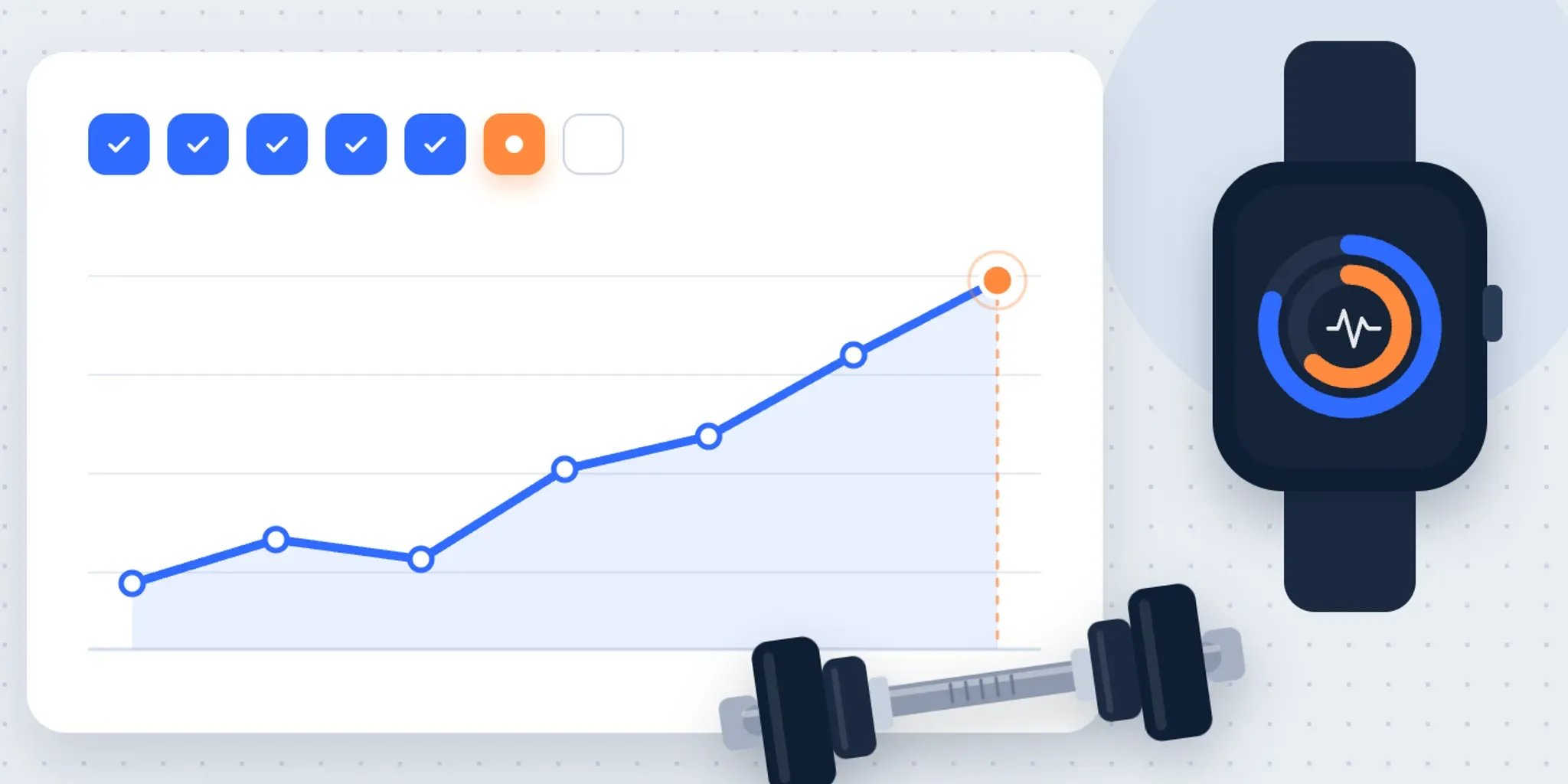
Learning how to track workout progress can make exercise feel less like guesswork. You do not need a complicated app, a perfect routine, or a dramatic before-and-after photo. A few simple notes about when you moved, what you did, and how it felt can show you what is becoming easier and help you choose a sensible next step.
Progress is personal. It might mean showing up more regularly, finishing a set with steadier form, walking for longer, or feeling more comfortable using a piece of equipment. The point of tracking is not to judge yourself. It is to gather useful information, notice patterns, and make fitness fit your real life.
What does workout progress actually mean?
Workout progress is a change in your ability, consistency, confidence, or experience over time. It is not limited to lifting heavier weights or changing how your body looks. If you are building a routine, the first useful sign of progress may simply be that you exercised on the day you planned, even if the session was short.
Progress can show up in several ways:
- Consistency: You complete activity more regularly or return to it after a busy stretch.
- Repetitions: You complete more controlled reps with the same exercise and load.
- Time: You move for longer, or complete the same session in less time without rushing.
- Effort: A familiar task feels more manageable.
- Skill and confidence: You understand an exercise better or feel more comfortable setting up equipment.
- Daily-life fit: You find a schedule or type of movement you can return to.
These measures do not all change at once. A week with fewer workouts may still include progress if you kept a realistic commitment during a stressful period. One unusually strong session does not prove that your usual workload has changed. Look for patterns over time rather than treating one workout as a final verdict.
It helps to separate an outcome from the behaviors that can support it. An outcome might be a task that feels easier or a personal goal you have chosen. Behaviors include putting a session on your calendar, setting out what you need, or returning after a missed day. You can record both, but behaviors are often more directly within your control. When the outcome is slow to change, that record still shows what you have practiced and what circumstances helped you follow through.
Progress also does not have to move in a straight line. Your available time, energy, routine, and familiarity with an activity can vary. A useful record gives those changes context instead of requiring every entry to be better than the last. Think of the log as a map of your experience, not a scorecard.
Which workout details should you track?
Start with a small set of details that help answer a question you actually have. If you are trying to build consistency, recording the date and whether you exercised may be enough. If you want to follow a strength exercise, note the exercise, load, and repetitions. If you are working on cardio, write down the activity and a measure such as time or distance.
Pick a measure you can repeat and understand later. A number without context may not tell you much. If you note that you did 10 repetitions, also note which movement and, if relevant, the equipment setup. If you record 20 minutes, include the activity. Your future self should be able to read an entry and know what it means without having to reconstruct the session.
Record the date and activity
Write the date and a short description of what you did. “Tuesday, 20-minute walk” is useful. “Gym session: upper body” may be enough if you are not currently tracking individual exercises. You can also mark a planned rest day or a missed session, but keep the record neutral. The purpose is to understand your routine, not to label a day good or bad.
A calendar can show whether certain days tend to work better, whether your schedule has changed, or whether you are expecting yourself to exercise at a time that rarely fits. A blank day is information, not a reason to start over. Add a brief reason only if it will help you make a practical change, such as a work shift, travel, or an appointment. You do not need to explain every day that looks different.
Be clear about what counts as activity for your own tracking purpose. If your goal is to become more consistent, a short walk may count even when it is not the session you originally pictured. If you are recording a specific planned workout, distinguish that from another activity. Either approach can work; the important thing is to use the same definition when you review the pattern.
For strength work, note sets, reps, and load
For each exercise you want to follow, record the sets, repetitions in each set, and load when applicable. For example: “Goblet squat: 2 sets of 8, 15-pound dumbbell.” If you use bodyweight, bands, or a machine, describe the setup clearly enough that you can repeat it. A machine setting or band color may help you remember what you chose.
Keep the notes practical. You do not need to record every detail if that makes a workout feel like paperwork. Pick a few exercises that matter to your current plan. If you are learning a movement, note something about the setup or form that will help you remember it, such as “slow on the way down.”
Write down sets separately when they differ. “8, 8, 6” tells a more useful story than “22 total” if you want to know how the work was distributed. If your repetitions changed because you stopped a set early or adjusted the activity, note that plainly. A clear record is more useful than making a session look neat after the fact.
For machines, include the machine name or a quick description, because settings and labels may differ. For a dumbbell exercise, record the weight of each dumbbell if that matters to your plan. For a bodyweight movement, write down a variation or support used, such as hands elevated on a bench, so you can compare like with like. These details are not about making the log perfect; they prevent confusion when you look back.
For cardio, track a repeatable measure
Choose one or two measures that make sense for your activity. You might record minutes, distance, a treadmill setting, or the number of intervals completed. If you walk outside, the route and approximate time can be enough. If you use a cardio machine, record the machine and a setting you can understand later.
Try not to compare sessions as if every condition were identical. Sleep, stress, temperature, equipment, and how busy your day was can affect how an activity feels. A repeatable measure is most helpful when paired with a short note about unusual circumstances. If a route was different or you paused to take a call, include that only if it changes how you interpret the result.
Choose a measure that matches the activity rather than forcing every workout into the same format. For a walk, duration may be easiest to remember. If you usually follow a fixed route, noting the route can help you compare the experience. For intervals, record how many rounds you completed and whether you followed the planned recovery periods. For a class or a varied session, the date, session name, and effort note may be plenty.
Suppose you wrote down “25 minutes” twice. That alone does not tell you whether the sessions were similar. One might have been an easy walk and the other a more challenging interval session. Adding a few words—“steady walk, familiar route” or “intervals, needed extra recovery”—makes the entry useful without turning it into a report.
Describe effort and comfort
At the end of a session, write a few words about how challenging it felt. You could use a simple scale from 1 to 10, where 1 means very easy and 10 means the hardest effort you could manage, or use words such as easy, steady, challenging, or unusually hard. Use the same method each time so your notes are easier to compare.
Effort is subjective, and that is fine. “The usual walk felt harder after a poor night of sleep” is a helpful observation. One sentence can also capture what numbers miss: “The last two reps were controlled,” “I needed a longer rest,” or “The seat felt too far forward.” Do not use a log to diagnose pain or push through it. If an activity causes pain, stop or modify it and seek appropriate professional guidance when needed.
Use the scale as a description, not a target that you must beat. A session rated 6 is not automatically better than one rated 4. The number simply helps you remember your experience. If you prefer words, keep the choices simple and consistent. You might write “easy,” “steady,” “hard,” or “different from usual.” There is no need to compare your rating with anyone else’s.
Comfort can be recorded separately from effort. For example, a new exercise might feel challenging but comfortable, while an ordinary movement might feel unexpectedly uncomfortable. A short note makes that distinction clear. If discomfort is persistent or concerning, do not rely on your tracker to determine its cause. Pause the activity and get suitable advice rather than attempting to solve a health question from workout data alone.
How can you track progress without making it complicated?
Use the format you are most likely to keep using. A paper notebook, phone note, calendar, or spreadsheet can all work. A specialized app is optional. The best system helps you make a decision without creating so much effort that you stop recording anything.
Before selecting a format, ask where you will use it. A paper notebook can be easy to open between sets, while a calendar can make scheduling patterns easy to see. A phone note can be handy if you already carry your phone, though it is worth keeping the entry short enough not to distract you from the session. A spreadsheet can sort repeated information, but setting it up is not the goal. Choose a system that reduces friction, not one that adds a new task.
Option 1: Use a simple workout log
Reserve a page or note for each session. Add the date, exercises or activity, amount completed, and a short effort note. A compact entry might look like this:
- Date: October 15
- Exercise: Seated row
- Work: 2 sets of 10 repetitions
- Load or setting: same as the previous session
- Note: Felt steady; keep the movement controlled
This is a format, not a prescription. Choose movements and a workload that suit your ability and any guidance you follow. Leave out fields that do not answer a useful question. For an example of a planned sequence of exercises, see the 10 Fitness training resource; keep your notes focused on what you personally completed.
You can copy a blank template into a notebook or note app:
- Date and approximate time:
- Activity or exercise:
- What I completed:
- Effort or comfort:
- One thing to remember next time:
It is fine to leave a line blank. For a walk, you may fill in activity, time, and effort. For a strength session, you may use the exercise and what you completed lines. A template is a prompt, not an assignment. If it takes longer to fill out than to remember the details, shorten it.
Option 2: Mark activity on a calendar
If your main goal is to create a routine, a calendar may be all you need. Mark days you moved and add a label such as walk, strength session, or stretch. You can mark the session you planned separately from what you completed. That distinction helps you see whether the schedule needs adjusting.
Do not make a streak the only measure of success. A streak can encourage you, but it can also make one missed day feel like failure. A calendar should help you notice the rhythm of your week, including rest and busy periods. You can pick up again at the next realistic opportunity.
Try symbols or short labels rather than writing a paragraph on each date. For example, use “W” for a walk and “S” for a strength session, then add a small note only when the day was unusual. At the end of the week, look at whether the pattern was workable. If two planned sessions repeatedly move because of the same scheduling conflict, the calendar gives you a concrete reason to choose a different time.
A calendar can also show the difference between intention and reality without turning it into a verdict. If you planned three sessions and completed two, ask whether two was a realistic plan for that week. Maybe the third session was displaced by a changing work schedule; perhaps you want to keep the plan and identify a backup time. The answer depends on your circumstances. The calendar helps you ask a better question.
Option 3: Keep a few recurring checkpoints
Choose one or two exercises or activities you repeat regularly and record those in more detail. Other sessions can be summarized. You might track how long a familiar walk takes and record repetitions for two strength exercises, while simply noting the date and type of other workouts. This is useful if a full log feels demanding.
Use similar conditions when practical, but do not let perfect consistency become a barrier. If a machine is occupied, choose another appropriate activity and record what you did. The purpose is to understand your experience, not make every session identical.
A checkpoint is most useful when it answers one clear question. If you are learning how to set up a particular machine, your checkpoint might be whether you remembered the adjustment and felt comfortable with the movement. If you are building a walking routine, it might be the number of days you chose to walk or the time you spent moving. If you already follow a plan, your checkpoint can be one or two movements from that plan rather than an entirely separate test.
Do not turn a checkpoint into a contest with yourself. Repeat the activity when it fits your routine, note the result, and move on. You do not need to test yourself at every workout. A familiar checkpoint is simply a reference point that helps you understand what is changing and what is staying steady.
How often should you review your workout notes?
Make brief notes during or right after a session, while details are easy to remember. Then review them every few weeks, or after several repetitions of the same activity. A weekly review can help with scheduling, while a longer view is often more useful for noticing gradual changes in repetitions, time, or confidence.
When you review, ask:
- Have I been able to exercise as often as I intended?
- Which days and times have been easiest to protect?
- Did I repeat any activities enough to compare them fairly?
- Did the same task feel steadier or more manageable?
- Was there a reason a session felt unusually difficult?
- What is one realistic adjustment I want to try next?
Look at more than one data point. If you completed eight repetitions one week and seven the next, that does not automatically mean you are moving backward. The second session may have followed a long workday, used a different setup, or simply been an ordinary variation. A recurring pattern across several sessions is more informative than one small change.
Tracking is not a reason to ignore a pattern that concerns you. If you repeatedly feel unusually tired, uncomfortable, or uncertain about how to proceed, consider scaling back and getting suitable guidance. Your record can help you explain what you noticed.
Use a short review routine
A review can take five minutes. First, look at the dates and note what you actually did, without editing the record to make it look more consistent. Next, identify one thing that worked: perhaps a particular time slot, a shorter session, or a clear setup note. Then choose one question to carry into the next stretch. This sequence keeps the review focused on learning rather than criticizing yourself.
For example, a person might see that they planned to exercise after work but often arrived home late. The helpful conclusion is not “I lack discipline.” It may be that a morning session or a shorter option fits better. Another person may notice that they usually complete a walk when they choose the route in advance. The next experiment could be preparing the route before the day begins. These are practical adjustments that come from the record.
Try not to change several parts of your routine at once. If you revise the schedule, add new exercises, and begin a different tracking system during the same week, it may be hard to tell which change helped. Keep the next experiment narrow when possible. If it does not work, that is information for another adjustment, not evidence that you cannot build a routine.
Compare sessions fairly
When comparing two entries, check whether they are similar enough to tell you anything. Were you doing the same activity? Was the equipment setup alike? Did you have similar time available? Did the session follow your usual plan, or was it shortened? These questions do not need to be answered perfectly. They simply help you avoid treating unlike sessions as a direct comparison.
Imagine that one walk was on a familiar, level route and the next included hills and several stops. If the second took longer, that does not necessarily mean your capacity changed. The route and circumstances were different. Likewise, two strength sessions may not compare closely if one used a different machine or a different range of movement. Add a note when a difference matters, then use the next comparable session as another reference.
Fair comparison does not require identical days. It means being honest about what changed. You can still learn from a different workout, but the question may be different. Rather than “Did I improve?” ask, “What did I learn about this route?” or “Which setup felt more comfortable?” This keeps the information useful even when direct comparisons are not possible.
How do you choose a sensible next step?
When a familiar workout feels manageable and your form remains controlled, you may decide to make a small change that fits your plan. Depending on the activity, that could mean adding a repetition, adding a little time, choosing another set, or continuing with the same workload until it feels more comfortable. You do not need to increase something every session.
Change one main thing at a time when you are trying to understand how your body responds. If you add time, repetitions, and load all at once, it becomes harder to tell what made the next workout feel different. Small, deliberate adjustments are easier to record and easier to reverse if they do not suit you.
Before changing a workout, ask whether you have repeated it enough to know how it usually feels, whether you can complete it with control and comfort, and whether the change fits the plan or guidance you are following. Would repeating the same session be a useful choice today? For strength movements, keep technique and control in view instead of chasing a bigger number. For cardio, a longer session is not automatically better if it does not suit your schedule or current capacity. If you are new to exercise, have a health concern, or are unsure how to progress safely, seek advice from a suitable health professional or qualified fitness professional.
Use a decision check before changing anything
Try a simple sequence. First, check what the record says: have you repeated this activity enough to notice a pattern, or are you reacting to one day? Second, check your experience: did the movement feel controlled and comfortable, or was something unusual? Third, check your plan: is a change consistent with the guidance you are following? If the answer is unclear, repeating the familiar version or asking a qualified professional may be the more sensible option.
A small change should be specific enough to record. “Make the workout harder” is vague. “Keep the same session and note how it feels” is clear. If your plan allows adjustments, you might choose a small increase in one measure, such as a little more time or a repetition, then write down what you changed. The point is not that one kind of increase is right for everyone; it is that a deliberate experiment gives you information.
Also plan a way to respond if the change does not suit you. You can return to the previous version, shorten the session, or ask for guidance. Knowing that you can adjust the plan makes it easier to approach progress without treating every decision as permanent. Your log should support that flexibility.
When repeating the same workout is progress
It can feel as if every workout should produce a new record, but repetition has value. Repeating a familiar activity gives you a chance to practice setup, build comfort, and see whether the routine fits your week. It also makes later comparisons clearer. A steady session can be a good choice when you are busy, learning, or returning after time away.
For instance, a new gym member may repeat a simple session because they are still learning where equipment is and how to arrange the visit. In the log, they might record that they remembered the setup more easily or felt less uncertain. Those details may matter more to their current goal than changing the number of repetitions. Someone returning after a break may decide to follow the same manageable plan several times before considering any adjustment.
Maintaining a comfortable routine is not a failure to progress. You may be protecting consistency, refining a skill, or making exercise fit a demanding season. Write down what the repeated session gave you, even if the measurements stayed the same. The answer could be “I completed the plan without rushing” or “This time still works for my schedule.”
What if your numbers stay the same or go down?
A flat stretch in your log is normal. You may be practicing a skill, adapting to a new schedule, or maintaining a routine during a demanding season. Maintaining a habit can itself be worthwhile. You do not need a personal record every time you exercise for the session to count.
Before making a major change, check whether you are comparing similar sessions. Consider the exercise setup, rest time, equipment, sleep, stress, recent activity, and how you felt that day. A short note can add context to a number that would otherwise be easy to misread.
If progress has stalled and you feel ready to adjust, first check whether the plan is realistic and whether you have been able to follow it consistently. You could return to a comfortable version of the activity, check your form, or ask for guidance. Avoid responding to a disappointing number with punishment, extreme restrictions, or a sudden jump in workload. The goal is a routine you can continue, not a test you must pass.
Look for the reason the measure may have changed
When a number changes, start with curiosity. Did you have less time? Did you use a different setup? Were you trying a new activity? Was the session interrupted? The answer may not explain everything, and it does not have to. The point is to understand whether the record is showing a recurring trend or an ordinary variation in one session.
For a schedule pattern, compare planned and completed sessions. If you repeatedly miss a particular day, consider whether the plan needs a backup time or a smaller version. For a repeated strength exercise, check whether the movement and equipment were the same before drawing a conclusion from the numbers. For cardio, note the route or machine conditions when they differed. A fair review asks what happened before deciding what it means.
If the record shows the same difficulty over several sessions, you do not have to solve it alone. You can simplify the plan, take an appropriate break, or ask a qualified fitness professional or health professional for guidance based on the concern. The tracker can help you describe what you noticed, but it is not a diagnostic tool and it should not encourage you to continue through pain.
Decide whether the measure still fits
A measure that once helped can stop being useful. Perhaps you initially tracked every visit to make a routine, but now the schedule is familiar. Maybe a number is making you anxious rather than helping you decide. You can change what you track as your needs change. A log is allowed to be temporary, and there is no rule that every measure must stay forever.
Before dropping a measure, ask what you wanted it to answer. If the question is answered or no longer important, remove it. If the information still matters but the method feels burdensome, use a lighter version. For instance, replace detailed set-by-set notes with a brief summary for activities you know well. The aim is to keep useful information available without allowing data collection to dominate the workout.
If comparing numbers feels discouraging, try tracking a behavior or skill instead. You might record that you completed the planned visit, learned a machine setup, or returned to an activity after a busy period. These details are concrete and do not require you to claim a particular outcome. You can also take a break from tracking and simply choose the next reasonable session.
How can you make tracking encouraging instead of stressful?
Make your log descriptive rather than judgmental. Replace “lazy” or “failed” with facts such as “missed the planned session because work ran late” or “did a shorter walk.” Neutral notes make it easier to see what happened and decide what to do next. Shame does not make the information more accurate.
Give yourself credit for process goals you can influence. Examples include preparing your gym clothes, taking a short walk, learning how to set up a machine, or returning after a break. These are concrete actions that keep your attention on confidence and progress rather than comparison.
It can help to define a minimum version of your plan for busy days. That might be a shorter walk or a brief, appropriate session. A flexible option can keep exercise connected to your routine without requiring every workout to be long. If you choose a shorter session, record it as completed rather than treating it as nothing.
A tracker should support your choices, not pressure you to compete with another person’s pace, body, schedule, or numbers. If seeing measurements increases stress, stop recording that measure. You can track consistency, skill, time, or how the session felt instead.
Use neutral language in your entries
Words influence how a record feels to read. “Skipped because I had a late shift” gives you a concrete detail. “I am terrible at sticking to things” turns one event into a judgment about yourself. Keep entries close to the facts: what you planned, what happened, and what might help next time. You can note disappointment honestly, but you do not need to turn it into a label.
Try writing a next-time reminder that is kind and useful. “Pack a water bottle before work,” “choose the shorter route if time is limited,” or “ask for help with the seat adjustment” points toward an action. A line such as “try harder” does not tell you what to do. Specific reminders create a bridge between noticing a pattern and deciding how to respond.
It is also fine to record positive feelings without making promises. You might write “felt more familiar today” or “glad I came in after a busy week.” Those observations matter because the experience of a routine is part of whether you want to continue. The log can capture that without claiming that every session will feel the same.
Set a flexible minimum, not an all-or-nothing rule
A minimum version is a smaller option you have already decided can fit a busy day. It might be a shorter walk, a brief visit, or another activity that is appropriate for you. It should not be a demand to exercise when rest or professional guidance is called for. Its purpose is to offer flexibility when the original plan no longer fits the time available.
Write down what your flexible option means before you need it. If “short session” is too vague, define it in a simple way, such as choosing one activity or spending a shorter planned period moving. The details are personal. The benefit is that you do not have to negotiate with yourself from scratch every time your schedule changes. When you use the flexible option, note it as a deliberate choice rather than a failed version of the original plan.
Review whether the minimum option is helping. If it regularly becomes the only version you can manage, that may be a sign to make the regular plan more realistic or to get suitable guidance. If it helps you stay connected to a routine during a busy week, it may be doing exactly what you intended. You are allowed to adjust the plan to your life.
What should you leave out of a workout tracker?
You do not need to record every possible measure. More data is not automatically more useful. Unless a measure supports a clear goal, it can add work without helping you decide what to do.
- Appearance-based judgments: Photos, clothing sizes, or body measurements are not required to recognize improved consistency, skill, or stamina. Do not make progress depend on a particular look.
- Unverified calorie estimates: Devices and apps may present numbers that look exact. You can track the activity without treating an estimate as a precise account of your effort.
- Every detail from every session: If comprehensive logging gets in the way, record only the measures that matter to your current focus.
- Comparisons with other people: Their history, circumstances, and goals are different. Your own earlier sessions are a more relevant reference.
- Daily judgments based on one result: A single session cannot summarize your overall ability or commitment.
If a measure does not help you choose a next step or appreciate what you are building, you are allowed to leave it out.
Be selective with numbers from devices and apps
Wearables and apps can collect information, but you do not have to treat every display as a precise measurement of your effort. A device may estimate or summarize activity in a way that is useful for noticing general patterns. It may be less helpful if you interpret a single number as an exact assessment of what you accomplished. Record a device measure only when you understand why you want it and how you will use it.
If you use a device, keep the central question simple. Are you checking whether you took a walk on certain days? Are you using a timer to remember intervals? If the information answers that question, it may earn a place in your routine. If you find yourself repeatedly checking numbers during a session, consider turning off a display or tracking less. Your attention and comfort matter more than collecting every available metric.
Do not let the presence of a number make a claim it cannot support. A screen may report a total, but your notes about the activity and how it felt still provide context. You can decide that the device is useful for one task and ignore other measurements. Choosing not to track something is an active decision, not a missing piece of your progress.
Keep private information private
A workout note can include personal schedule details or information about how you felt. Store it in a place that feels appropriate to you. If you use a shared device, avoid adding details you would not want someone else to see. You do not need to include private health information in a general workout log to make the record useful.
Keep the log for yourself unless you choose to share it with a qualified professional who is helping you. If you do share it, explain what the notes mean and what you are hoping to understand. A short, accurate description is better than sending a large file of unexplained numbers. You remain in charge of what you record and who sees it.
How should beginners track progress when starting at a gym?
When you are new to a gym, comfort and familiarity are useful things to notice. You might record which equipment you tried, whether you could set it up, and what you would like to ask about next time. You do not have to know every exercise before you begin. Learning the space and finding a routine that feels manageable are part of the process.
Keep your first notes simple. For example: “Visited after work; walked for 15 minutes; next time, ask how to adjust the seat on the bike.” That tells you what happened and gives you a practical next step. Later, if you repeat the activity, you can compare the time or effort without expecting immediate, dramatic changes.
If it is helpful to see available club information, browse 10 Fitness or look at the amenities information. Details can vary by location, so confirm what is available at the club you plan to visit. You can also ask questions before deciding what kind of routine or membership is right for you.
Make your first few visits easier to remember
For an early visit, you may care more about navigation and comfort than performance numbers. Record where you began, what activity you chose, and anything that would make the next visit smoother. Examples include “arrived with enough time to look around,” “need to remember where I put my water bottle,” or “ask someone how this machine adjusts.” These notes help you reduce small uncertainties without expecting yourself to know the whole gym immediately.
If a particular space feels busy or you do not know how to use a piece of equipment, choose an appropriate alternative rather than forcing the session to follow a script. In your log, note what you did instead. That helps you distinguish a change in plan from a missed session. If you have questions about an exercise or equipment setup, ask a qualified professional rather than guessing from a note or a video that may not fit your situation.
After several visits, review which parts of the experience became more familiar. Perhaps you can now choose an activity without spending as long deciding, or you have found a time that fits. This kind of confidence is meaningful information. It does not need to be translated into an appearance goal or a performance claim to count as progress.
Keep club details accurate and personal
A gym can offer different facilities or services at different locations. If a particular amenity, class, or access detail matters to your plan, check the current information for the club you intend to visit. Do not assume that an item you saw at one location is available everywhere. Your tracker should describe what you actually used, not what you expect every club to provide.
Make your notes specific to the session. “Used the cardio area” tells you what you did; “the gym always has the same equipment available” is a broad assumption that may not be true. If an activity depends on a particular setup, make a backup choice in your plan. Flexibility makes it easier to keep a session useful when the place or equipment is different from what you expected.
If you are comparing a visit at different times, note the time of day only when it helps you plan. The goal is not to monitor other people or evaluate the facility from one visit. It is to understand which conditions help you feel comfortable and keep your own routine realistic.
How can you start tracking this week?
You can set up a useful record in a few minutes. Begin with one focus, choose a place to write, and decide when you will review it. You do not need to wait for a new month or a perfect start date. If you already have a routine, start with your next session. If not, record the activity you choose and what would make it easier to repeat.
- Choose one question. For example, ask whether a particular time of day works, whether a walk feels comfortable, or whether you can remember the setup for an exercise.
- Pick a simple format. Use a notebook, calendar, phone note, or another system you can access easily.
- Choose up to three details. You might record date, activity, and effort; or exercise, repetitions, and a short note.
- Write down what happened. Keep the entry factual, including a shorter session or a rest day when it helps explain the week.
- Review after several entries. Look for one pattern and choose whether to keep the same approach or make one small adjustment.
A reusable blank entry could include date and time, activity or exercise, what you completed, effort or comfort in a few words, and one thing to remember next time. Copy only the lines that are useful to you. For a routine-focused calendar, you can make it even shorter: date, activity, and “worked well / adjust next time.” A small log you actually use is more valuable than an elaborate template that stays blank.
At review time, write one sentence that summarizes what you learned. For example: “A walk before dinner fit more easily than a late workout,” or “I need to ask how to adjust the machine before comparing sessions.” The next step might be to keep the same schedule, repeat the same activity, or ask for help. It does not have to be an increase. If you miss entries, start again with the next session rather than reconstructing details from memory.
A sample week of simple entries
Here is one example of a brief record. It is not a plan or a recommended schedule; it shows how the same basic notes can capture different experiences.
- Monday: Planned a gym visit; schedule changed, so no session. Note: check whether an earlier time is possible next week.
- Wednesday: Walked for 18 minutes. Effort: steady. Note: familiar route felt easy to fit after dinner.
- Friday: Strength session from current plan. Recorded two exercises, sets, repetitions, and equipment setup. Note: ask about machine adjustment next time.
- Sunday: Rest day. No extra note needed.
At the end of that week, the person might notice that the Wednesday walk fit comfortably and that Friday involved a question to ask. The missed Monday session is not hidden, but neither is it treated as proof of failure. The next week could include the same walk time, a different planned visit time, or the same routine while they gather more information. One week does not have to settle the question.
A different person could write only three calendar marks and a note about which day felt easiest. That is also a valid tracking system if it answers the question they chose. The sample is useful only insofar as it gives you an idea; copy the parts that fit and leave the rest behind.
Choose a review date you will remember
If you want to review, attach it to something you already do. You might glance at the log on a chosen day each week or after you have repeated a familiar activity a few times. A reminder can help, but it should not become another source of pressure. If a review day passes, look at the notes when you next have a moment.
During review, write down one observation and one possible next step. An observation might be “the shorter session was easier to schedule.” A possible next step might be “keep the shorter option for busy days.” Do not add five new goals because you noticed five things. Choose the most useful point and give it time to inform your routine.
If you prefer not to do formal reviews, that is okay. You can use the notes only when you need to remember what you did or answer a question. Tracking is a tool, not a rule of participation. You can stop, restart, or simplify whenever that makes the process more supportive.
Explore ways to set realistic fitness goals
Frequently asked questions about tracking workout progress
How long does it take to see workout progress?
There is no single timeline that applies to everyone or every type of progress. Consistency, comfort, skill, repetitions, and time can change at different rates. Record what you do and review several comparable sessions rather than using a promised deadline to judge yourself.
Should I track every workout?
Only if a full record is useful and sustainable for you. If it feels like too much, track the date, activity, and one measure related to your current focus. You can add detail later if you find you need it.
Is it better to track weight, repetitions, or time?
Choose the measure that matches the activity and question you have. Repetitions and load can help you follow a strength exercise; time or distance may suit a walk or cardio session; dates can help you notice consistency. You can use different measures for different activities, and none has to be the only definition of progress.
Do I need a fitness app to track progress?
No. A notebook, phone note, calendar, or spreadsheet can work. An app is one option, not a requirement. Choose a format that is easy to use and lets you review your own notes without adding pressure.
What if tracking makes me feel discouraged?
Reduce the amount of information you collect or take a break from tracking. Focus on neutral observations, consistency, comfort, and skills you are learning. You can also ask a qualified fitness professional for help choosing a useful, supportive way to monitor your routine.
A useful workout log does not have to be impressive; it only has to help you notice what you did and choose a next step that fits your life. Start with one or two simple notes, stay curious about your own patterns, and let progress mean more than a number or a look.