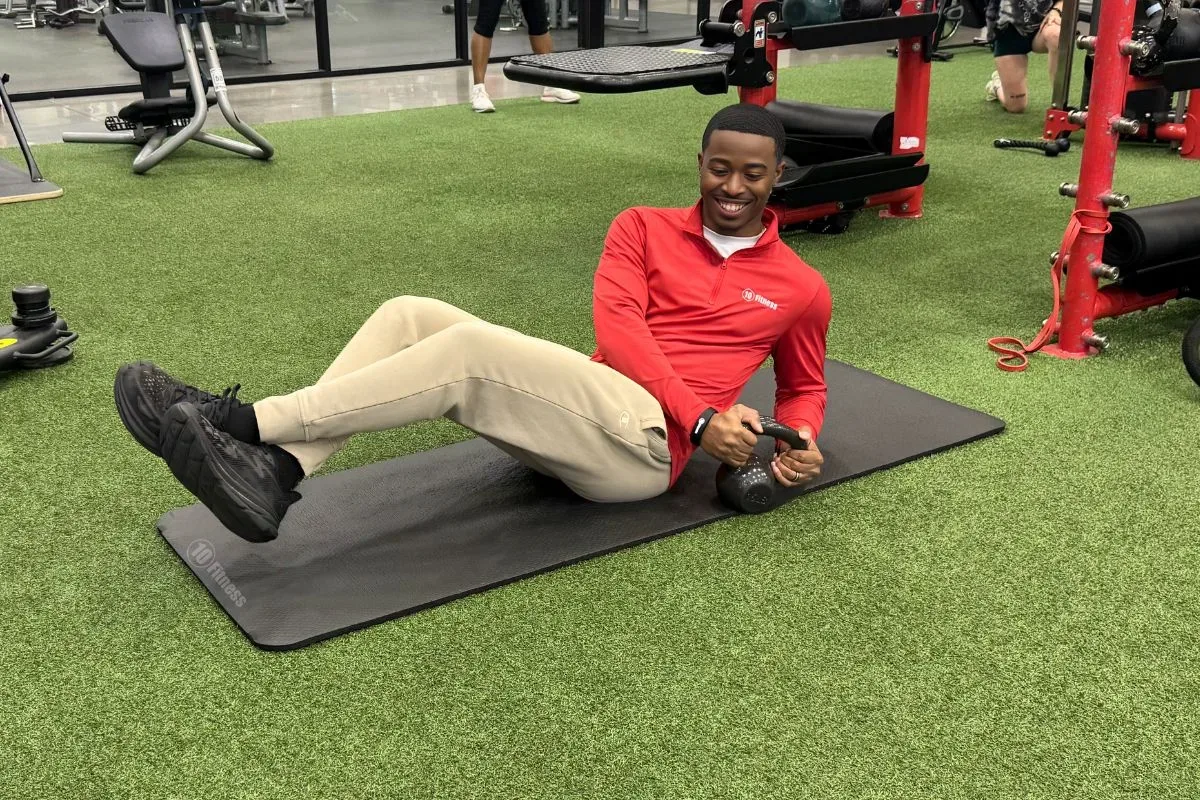
Nobody warns you about this when you start looking up core workouts. You just find a list of exercises and a lot of assumptions about who you already are. Here’s what’s actually true: you do not need to be an athlete. You don’t need gym experience. You don’t even need to know the difference between a plank and a dead bug right now. Core training is one of the most forgiving places to start in any gym, and most beginners skip it because they think it’s for someone who already knows what they’re doing. It isn’t.
One thing that trips people up: your core is a lot bigger than your abs. Your back muscles are in there. Your hips, your pelvis, the glutes that catch you when you stumble on an uneven curb. All of it fires together when you’re doing the kind of stuff that’s just… life. Standing for a long stretch, hauling something awkward, not falling. That collection of muscles does more for how you actually feel day to day than any amount of floor crunches ever will. If you’re searching for how to start core training as a gym beginner, this guide was written for exactly where you are, at whatever 10 Fitness location in Arkansas is closest to you, with no assumption that you’ve done any of this before.
Jump to:
What Is the Core, Really?
Here’s a better way to think about it: your core isn’t really a muscle group. It’s more like a system, a bunch of different things that work together whether you’re paying attention or not. The transverse abdominis sits deepest, wrapping around your spine like a built-in belt you never asked for. The obliques cover your sides. Your erector spinae and multifidus keep you from folding forward when you pick something up. And then there’s your glutes, your hip flexors, which most people don’t think of as “core” but absolutely are. The thing is, none of them work independently. Next time you grab something heavy off a low shelf, or even just shift your weight onto one foot while you’re standing around, that whole system is already doing its job. It’s been doing it your whole life, trained or not.
That matters more than most people realize. According to Harvard Health, back pain affects roughly 80% of Americans at some point in their lives. Building a stronger core is one of the most practical things you can do to reduce that risk. It directly supports the muscles and structures that protect your spine.
A strong core also just makes your other training feel better. If you’re getting into strength training for beginners, core stability is what lets you hold good form under load, stay out of your lower back, and actually feel the right muscles working. Without it, a squat or a deadlift starts leaking energy into places it shouldn’t go.
None of this requires being in great shape already. Starting is the only prerequisite.
What Are the Best Beginner Core Exercises?
Five moves. That’s all you need to build a real foundation: the forearm plank, dead bug, bird dog, glute bridge, and hollow body hold. No equipment required to get started, and every single one is safe if you’re brand new to this.
When you’re ready to add resistance, every 10 Fitness location has what you need. But for now, just your body and a little floor space will do.
Forearm Plank
Set your forearms on the floor, elbows right under your shoulders. Then think about making your body one long straight line, head to heels, and tighten your core like you’re bracing for impact. The 10 Fitness plank guide walks through the full form if you want a closer look. What makes this one worth your time is that it works your whole core at once, not just the abs you can see in the mirror.
- Sets/reps: 2 sets, hold for 20–30 seconds
- Muscles worked: transverse abdominis, obliques, glutes, shoulders
Dead Bug
Flat on your back, arms pointing straight up at the ceiling, knees bent at 90 degrees floating above your hips. From there, slowly lower one arm behind your head while the opposite leg reaches toward the floor. Your lower back stays glued to the ground the whole time. Bring it back, switch sides, repeat. This one rewards patience. The slower you go, the harder your core actually works.
- Sets/reps: 2 sets, 8–10 reps per side
- Muscles worked: transverse abdominis, hip flexors, lower back stabilizers
Bird Dog
Get on all fours, hands under your shoulders, knees under your hips. Reach one arm forward and extend the opposite leg back, hold it for two or three seconds, then bring it in and switch. The key is keeping your hips from tilting or rotating as you move. If they start to drift, that’s just your body telling you to dial back the range a little. Control matters more than range here.
- Sets/reps: 2 sets, 8–10 reps per side
- Muscles worked: erector spinae, multifidus, glutes, shoulder stabilizers
Glute Bridge
On your back, knees bent, feet flat on the floor about hip-width apart. Drive through your heels and lift your hips until your body makes a straight line from your shoulders to your knees. Squeeze your glutes at the top. People call this a glute exercise, and sure, your glutes are working hard. But your core is what keeps everything locked in while your hips extend. That same pattern shows up when you pick something up off the floor or climb a set of stairs.
- Sets/reps: 2 sets, 12–15 reps
- Muscles worked: glutes, hamstrings, transverse abdominis, lower back
Hollow Body Hold
Lie on your back with your arms stretched overhead and legs straight out. Press your lower back into the floor, then lift your arms, shoulders, and legs just a few inches and hold. If the full version feels like too much right away, bend your knees and keep your arms at your sides. That’s a completely valid starting point. Work there until it feels solid, then progress from there.
- Sets/reps: 2 sets, hold for 15–20 seconds
- Muscles worked: rectus abdominis, hip flexors, transverse abdominis
Here’s what that actually looks like when you put it on a calendar.
Sample Beginner Core Workout Plan
Most beginners do too much, too soon. Five days a week sounds committed, but it’s also the fastest way to end up sore, frustrated, and skipping everything by week three. Two or three sessions is genuinely enough when you’re starting out, with real rest between them.
The Cleveland Clinic recommends keeping it to 1-2 sets of 10-15 reps, two to three times per week, with sessions around 15-20 minutes. Those off days aren’t gaps in your progress. Muscle tissue breaks down during exercise and rebuilds during recovery, so skipping rest days doesn’t speed things up; it slows them down.
Start here and work through the full round before resting.
| Exercise | Sets | Reps/Time |
|---|---|---|
| Forearm Plank | 2 | 20–30 sec hold |
| Dead Bug | 2 | 8–10 reps per side |
| Bird Dog | 2 | 8–10 reps per side |
| Glute Bridge | 2 | 12–15 reps |
| Hollow Body Hold | 2 | 15–20 sec hold |
When the movements stop feeling like work, that’s your cue to make them harder. Tack on 5 seconds or a couple reps every week or two, and when bodyweight alone isn’t cutting it anymore, step into the weight area. Cables, light dumbbells, or bands will do the job, and 10 Fitness has all of it on the floor.
Want to go beyond core work? A fuller beginner workout plan is a solid next step once you’ve got your foundation dialed in.
How to Choose the Right Difficulty Level
Here’s the thing most people get wrong about core work: they think harder is better. It’s not. Control is better.
A useful gut-check is the plank test. Can you hold one for about 20 seconds with your back flat and your hips not doing that slow-sink thing? If yes, you’re working at a solid level. If your lower back starts dipping before you get there, cut the hold short. Build from 10 seconds. Build from 8. That’s not falling behind, that’s literally just where you start, and everyone starts somewhere.
Honestly, the progression here is pretty forgiving once you stop overthinking it. Finish a set and it felt almost easy? Add a few seconds or an extra rep next time. Couldn’t quite get through it? Scale back a little, no big deal. Your body will tell you what it needs, you just have to pay attention instead of white-knuckling through every rep hoping for the best.
Whatever level you pick today, you picked it because it made sense for where you are right now. That’s the whole job.

Core Training for Your Goals
Ask ten people why they started training their core and you’ll get ten different answers. That’s not a problem. The exercises don’t care about your reason. They just work.
For a lot of people, the first thing they notice isn’t strength. It’s posture. Sitting at a desk for eight hours starts to feel less like punishment. Carrying groceries up the stairs stops being a thing you dread. That’s the pelvic floor and deep stabilizers doing their job quietly in the background, especially useful if you’re recovering from pregnancy, dealing with discomfort during movement, or just tired of feeling like your lower half is working against you.
For others, core training is really about what it unlocks elsewhere. Squats, deadlifts, carries. Those lifts have a ceiling when your midsection can’t hold position under load. Closing that gap is usually less about loading the bar heavier and more about building the base underneath everything else.
And if you spend most of your day seated, there’s a decent chance you’ve already met anterior pelvic tilt. It’s the reason so many desk workers develop chronic lower back pain that no amount of stretching seems to touch. Consistent core work is one of the few things that actually addresses the cause instead of just managing the symptoms. Slow progress, but it sticks.
Everyone starts from the same place, more or less: learning the movements, figuring out what their body can do, building from there. The foundation takes a few weeks to feel solid, and then things start to click.
How Long Does It Take to See Results from Core Training?
Most beginners start to feel something real shift somewhere around the four to six week mark. Not dramatic, not Instagram-worthy. Just different.
The Cleveland Clinic notes that four to six weeks of consistent core training produces measurable change, and for most people it shows up in ways they weren’t expecting: lower back that doesn’t complain after a long day, posture that holds without effort, more control when lifting or running or just moving through a workout. Forget the six-pack. That’s not what we’re tracking here.
Here’s what the timeline actually feels like: around weeks two and three, the exercises stop feeling quite so hard. You’re less wobbly in a plank. The dead bug doesn’t make you hold your breath. Then somewhere around week four to six, you notice it outside the gym. You’re sitting up straighter without thinking about it. You got up off the floor without bracing yourself. Those are the wins.
Consistency is doing its thing in the background even when the scale hasn’t moved and your jeans fit exactly the same as last Tuesday. Short sessions, kept up over weeks, add up faster than most people expect.
Start Your Core Workout at 10 Fitness in Little Rock
10 Fitness Cantrell on Cantrell Road has open floor space, functional training zones, and no equipment lines to fight for. That combination makes it a practical place to actually run this plan instead of just thinking about it.
The 24/7 hours mean you’re not working around anyone else’s schedule. Come in before work, after midnight, whenever your body is ready to move. The floor is open and the space works.
If you’re in Midtown or just nearby, 10 Fitness Cantrell is a solid starting point. Already know you want more structure? Explore training programs at 10 Fitness. Coming in fresh with no gym experience? Start here.
For some people, having someone in your corner from the beginning makes a real difference. If that sounds like you, personalized guidance is worth looking into before you’re three weeks in and guessing at form.
Work With a 10 Fitness Trainer
A 10 Fitness Nationally Certified Personal Trainer can look at how you’re actually moving and build something around where you’re starting, not where someone else is. Your first session is free, so there’s no commitment before you know whether it’s a good fit. Work with a personal trainer and get the technique right before the weight or intensity goes up.

Questions Our Trainers Hear Most
How Often Should Beginners Do Core Workouts?
Honestly, two or three times a week is plenty. Muscles get stronger during recovery, not the session itself, so the rest days are doing real work too. More is not better when you’re just starting out.
Do I Need Any Equipment for Beginner Core Workouts?
Just floor space. Every move in this plan is bodyweight only, and that’s actually ideal when you’re still learning the mechanics. When you’re ready to add resistance, bands and cable machines are at every 10 Fitness location.
What’s the Difference Between Abs and Core?
Abs are one piece of it. The core also pulls in your obliques, lower back, glutes, and hip flexors. That whole system works together every time you lift, balance, or change direction, which is why crunches alone won’t get you where you want to go.
Are There Beginner Core Workouts Near Me in Arkansas?
We’ve got you. 10 Fitness has locations spread across the state, including 10 Fitness Cantrell in Little Rock, plus clubs in Conway, North Little Rock, Jonesboro, Maumelle, and more. Use the find a location near you tool to see what’s closest.
The Beginner Gym for Every Body
10 Fitness has clubs spread across Arkansas, anchored by the Cantrell location in Little Rock and supported by clubs in Conway, Jonesboro, Searcy, and several other communities statewide. The network keeps growing, with a new Bowman Road / West Little Rock location opening in 2026.