Strength training for beginners can feel intimidating, especially when you walk into a gym and see racks, machines, and people who seem to know everything. But here’s the truth: every strong body started with a first workout. You don’t need special gear or a long program. You need a place to begin. However, you’re not alone. By signing up for a gym membership, you learn how to build strength, save money, and feel good doing it.
Key Takeaways:
- Start strength training 2–3 times/week for 20–30 minutes using bodyweight or light weights (3–5 lbs).
- Focus on simple moves: squats, push-ups, glute bridges, bicep curls, and overhead press.
- Warm up 5 minutes (walk, arm/leg swings); cool down with 5 minutes of light movement and stretching.
- Do 2–3 sets of 8–12 reps per exercise; rest 60–90 seconds between sets.
- Equipment needed: none to start. Use water bottles, chairs, or backpacks if no dumbbells.
- Plan workouts on non-consecutive days; walk or stretch on rest days to recover.
- Strength training builds lean muscle, strengthens bones, supports metabolism, and helps with weight loss.
- Track progress with apps (e.g., Strong, Start TODAY) and set clear, realistic goals.
- Form matters — start slow, use mirrors or videos, and don’t skip warm-ups or cooldowns.
What Is The Best Way to Start Strength Training for Beginners?
The best way to begin is to keep it simple. You don’t need big muscles, a gym pass, or expensive equipment. You need a clear plan, safe movements, and the right attitude.
Start by focusing on your goal, your breath, and your body's needs. It is crucial to both physically and mentally prepare for strength workouts, especially if you are a beginner.
Before you begin, pack water, a towel, and clean shoes. Wear clothes you can move in. Eat a small snack with carbs about one to two hours before. A banana or toast with peanut butter works well.
Mentally, remind yourself you don’t need to be strong yet; that’s what the training is for. Tell yourself: "I’m doing this for future me."
What Are Safe and Realistic Strength Training Goals for Beginners?
Try to train two or three times a week for 30 minutes. Start with bodyweight exercises or light weights. A goal could be doing a 20-second plank or 10 quality squats. Each week, increase something: hold a move longer or add a rep. The goal is steady progress with careful form.
Focus on how you feel. Are tasks getting easier? Is your posture better? If yes, you're moving in the right direction. And remember, progress takes time. If you are feeling unsure about how to track your progress, personal trainers at 10 Fitness are here to support strength training for beginners.
What Are Some Key Components of a Beginner Strength Routine?
Your routine should include a warm-up, full-body exercises, and a cool-down, targeting all major muscle areas: legs, chest, arms, and core. This ensures you start strength training correctly.
Begin with moves like squats, push-ups (against a wall or on your knees), and glute bridges. Add light dumbbells (3–5 pounds) when you’re ready. Do 2–3 sets of 8–10 reps.
Rest about 60 seconds between sets. Stretch after each session to help with soreness. Workouts should last 20 to 30 minutes. Start small, but start. Strength grows with time and consistency.
How Do I Structure a Strength Training Routine Safely?
Form and structure are crucial in strength training for beginners. Keep your plan in this order:
- Warm-up
- 3–5 main exercises
- Cool-down
Start with five minutes of light movement, like walking in place. Add some arm swings and knee lifts.
Then, choose one or two moves for each area:
- Lower body: Squat, lunge, or glute bridge
- Upper body: Push-up, row, or dumbbell press
- Core: Plank, bird-dog, or dead bug
Perform 2–3 sets of 8–12 reps per movement. Rest about a minute between sets.
End with light walking and stretching. This lowers soreness and helps your body calm down.
Strength Training Exercises for Beginners
Stick with basic moves that use large muscle groups and feel natural. These are easier to learn and help you build good habits. A month of consistent training builds control, skill, and strength. Keep it short, safe, and repeatable. You don’t need perfection, only progress.
What Are Effective Bodyweight and Dumbbell Exercises for Beginners?
The best starting exercises include squats, push-ups, glute bridges, bicep curls, and dumbbell presses. These exercises target legs, back, arms, shoulders, and core. They’re simple and can be done with or without weights.
- Squats work your lower body and core. Stand with feet apart. Bend hips and knees, then rise. Use a chair to guide depth if needed.
- Push-ups focus on your chest, arms, and middle. Begin with wall or knee push-ups. Keep your back straight.
- Glute bridges support the hips and lower back. Lie down, bend knees, lift hips up. Squeeze, then lower slowly.
- Bicep curls use a dumbbell or any small weight. Keep your elbow close to your side. Lift and lower with control.
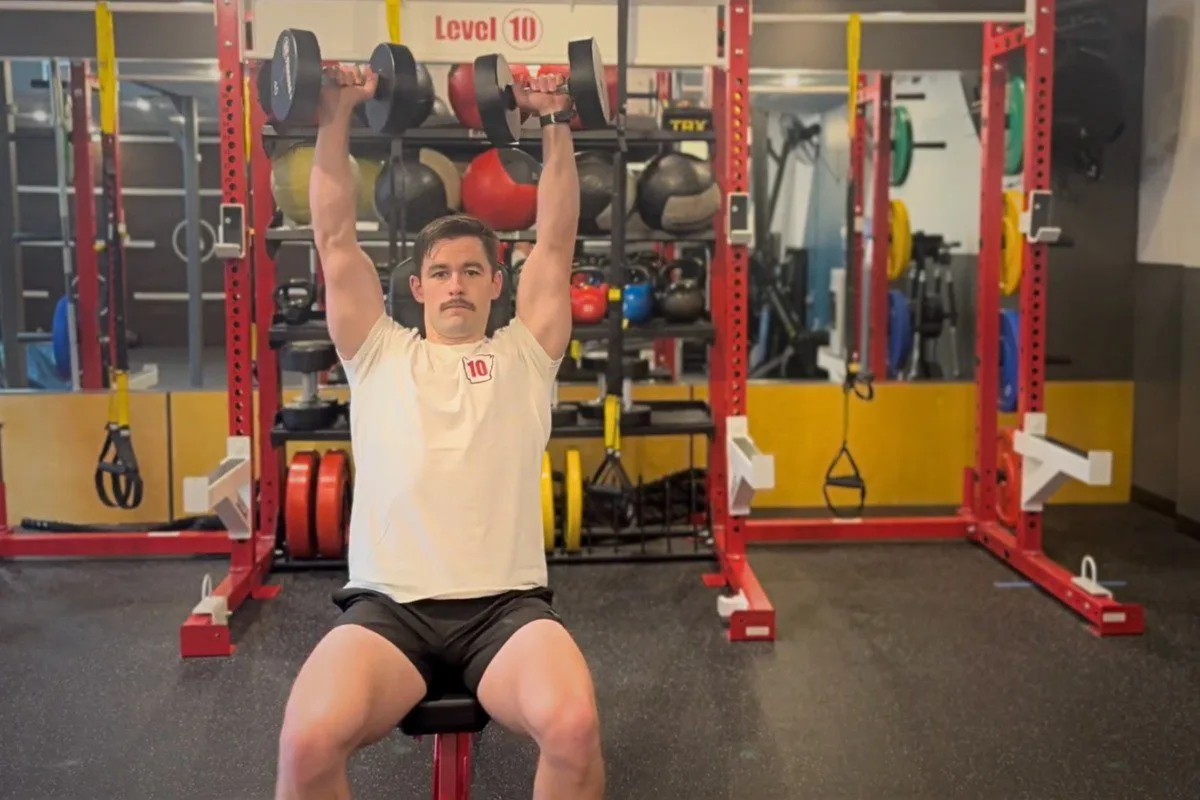
- Dumbbell overhead presses build shoulder strength. Hold two weights near your shoulders; push up, then bring them down carefully.
What Rep Ranges and Rest Periods Should I Follow?
Strength training for beginners usually starts with 8 to 12 reps, and 60 to 90 seconds rest.
If you can do more than 12 reps easily, increase reps or weight. For upper body and core, move toward 15 reps. For legs, stay in the 8–12 range at first.
Use light weights and maintain good form. Two or three sets per move are enough. Stop if your form breaks, or if you feel something pinch or a sharp sensation.
You can always adjust or switch to a simpler move. For the best strength training for beginners, 10 Fitness offers support for gym-goers of all levels.
What Is A Good Weekly Schedule For Beginner Strength Training?
A strong weekly plan includes three short, total-body workouts. For example, try workouts on Monday, Wednesday, and Friday.
This setup helps muscles recover between sessions. Each session lasts under 30 minutes. Use basic movements, like squats and push-ups, to train every muscle group.
Use off days to walk, stretch, or relax. Muscle repair happens outside of workouts. A walk on those days supports your recovery. Don’t lift weights two days in a row early on.
How Can I Check My Strength Training Form?
Use a mirror or video to compare yourself to trusted demos.
Start with basic movements like squats or push-ups. Film yourself or use a mirror. Check your knees, hips, and spine to match solid technique. Fixing mistakes early prevents injury.
Pain in the wrong place means pause. Not all pain is “okay” pain. Use form checks often.
What can keep you safe? Warm up before, move with awareness, and cool down afterward.
Take 5 minutes to warm up: walk, swing your arms, or raise your knees. Add active stretches like hip or leg swings to prep joints.
After lifting, wind down with walking and stretches. Focus on the muscles you used: legs, arms, and back. Stretching can ease soreness and help your next workout feel better.
And breathe! Don’t hold your breath. Exhale when you lift or press; inhale on the way down.
What Are Common Mistakes in Strength Training for Beginners?
- Skipping warm-ups and cooldowns: Going in cold raises your risk of discomfort or injury.
- Lifting too much weight too soon: Light and steady keeps you safe. Add weight with care.
- Ignoring how you feel: Tired muscles? Fine. Sharp pain? Stop.
- Moving too fast: Go slow—two seconds up, three down. Fast motion can mean poor form.
- Skipping rest days: Muscles need time off to rebuild. If your legs are sore, focus on the upper body next.

How To Stay Motivated During Strength Training for Beginners
The most important thing to staying motivated and on track during strength training is to keep showing up. Do your reps, mark your progress, and come back tomorrow. That’s how strength truly stays with you.
Celebrate small steps often. Added a rep? Lifted a bit more weight? Those wins matter. Physical changes may take time, but skills improve quickly. Follow a weekly plan that helps you move each day and stays flexible.
Add variety. Train with a friend. Play music you like. Take weekly photos to see your progress. Expect tough days, but stick with it.
How Can Beginners Track Strength Training Progress?
Tracking can be simple. Use paper logs, calendars, or workout apps.
The Start TODAY app includes workout options and food suggestions. It helps form habits and celebrate progress.
Clear goals give you direction. Logging wins proves you’re making progress. That’s why trainers at 10 Fitness are here to help you with strength training for beginners.
Aim for something simple, like “Do squats twice a week” or “Lift for 15 minutes on Mondays.” Use a planner or app to mark each workout. Seeing progress builds motivation and builds a habit.
Are There Health Benefits to Strength Training?
Yes, strength training for beginners has many health benefits, including supporting weight loss and increasing daily energy.
Muscles burn more calories than fat, even when resting. That means lifting weights helps your body use more energy all day, even while sleeping or reading. If your goal involves weight changes, strength training supports that over time.
Getting stronger also makes things like stairs or lifting easier. Your body feels less tired and moves better. This can raise your daily activity levels without extra effort.
People may focus on cardio for calorie burn, but strength work changes your body long term. Lean muscle tissue supports metabolism over time. 10 Fitness offers an array of strength-training-related amenities; find a location near you today.
How Do I Start Strength Training For Beginners?
Anyone can begin in the inclusive 10 Fitness community. Strength training brings more control, better health, and ease in everyday life.
Strength training for beginners becomes easier when it’s part of your routine. You’ve learned how to start, build goals, and track your work. You don’t need lots of gear; just focus on good movements, steady effort, and finding a community that supports you, like 10 Fitness. Strength improves your energy, mood, and daily life. Keep showing up, and your body will return the favor.
Fitness for Every Body
Find a location near you, or contact us for more information on starting strength training for beginners. We can’t wait to see you in the gym!