GLP-1 medications can change appetite, food intake, and energy levels. If you use one, strength training may support function and muscle as part of a plan created with your healthcare professional. The right exercise, nutrition, hydration, and recovery approach depends on your medication, health history, and goals.
Medical note: This article is general fitness education, not medical advice. Do not change medication, protein intake, or exercise plan based on this page. Ask your prescribing clinician or a registered dietitian for guidance, especially if you have side effects or an ongoing health condition.
Principales conclusiones:
- GLP-1 medications and muscle changes: weight changes during treatment can involve fat and lean tissue, but individual responses vary.
- Training frequency: some people may include strength training during treatment, with frequency adjusted to energy, recovery, and clinician guidance.
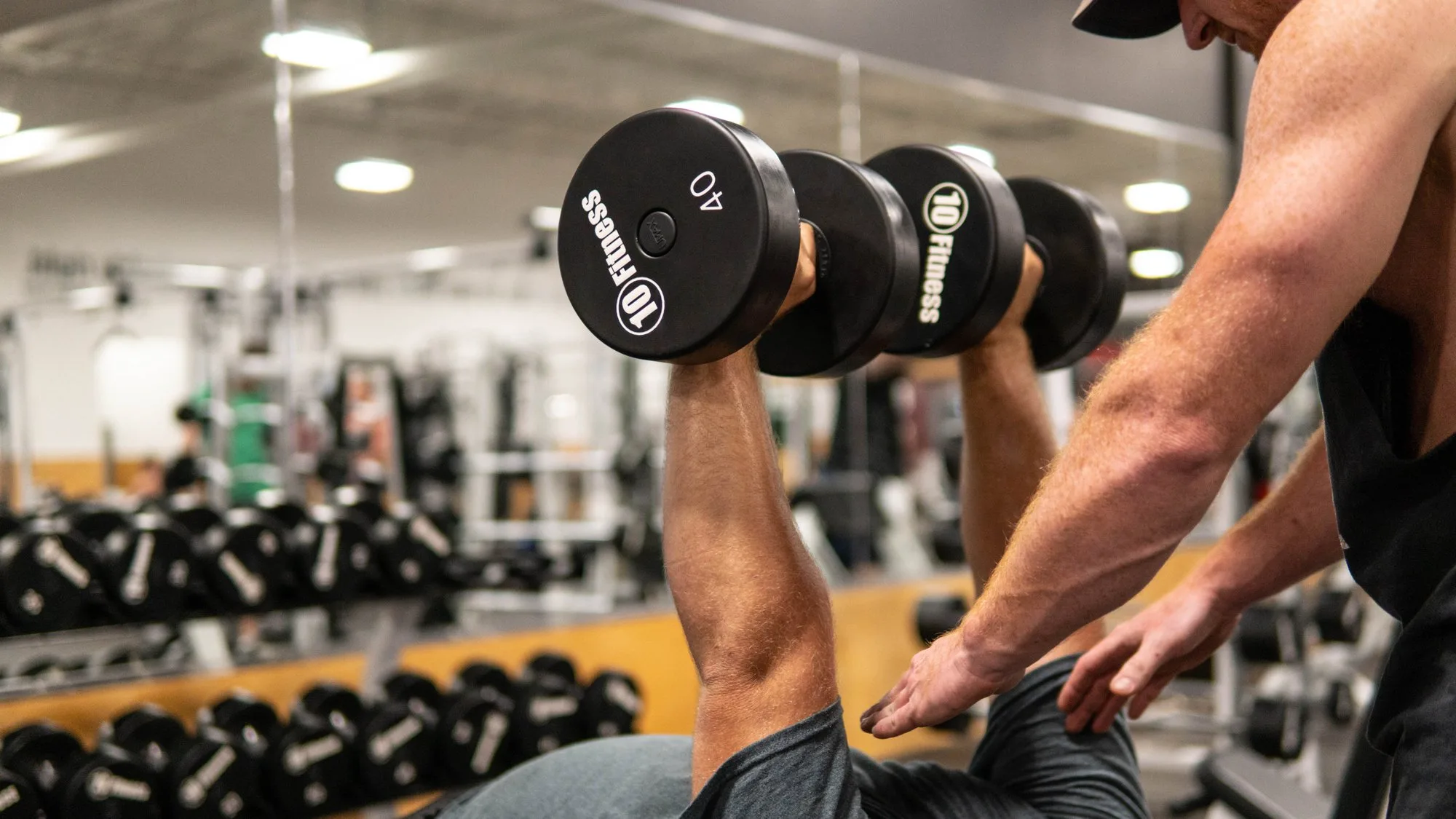
- Servicios del gimnasio: 10 Fitness ofrece entrenamiento personal, áreas designadas para levantamiento de pesas y entrenamiento de fuerza de nivel olímpico.
- Protein considerations: protein needs vary; ask a clinician or registered dietitian about an appropriate target.
- Exercise options: compound and isolation movements can both be included, depending on goals, experience, and comfort.
- Hydration considerations: hydration needs vary; discuss fluids and electrolytes with a healthcare professional, especially if medication side effects affect intake.
- Energy management: a clinician can help you plan around appetite, energy, and workout tolerance.
- Rest and recovery: sleep and rest needs vary, so adjust training to recovery and discuss concerns with a healthcare professional.
¿Cómo afectan los medicamentos GLP-1 a la masa muscular?
GLP-1 treatment can be associated with changes in body composition, including lean mass, but individual responses vary.
During weight loss, changes in both fat and lean tissue can occur. GLP-1 receptor agonists affect appetite regulation, and body-composition responses can vary with medication, health history, activity, nutrition, and other factors. Discuss any concerns about strength or muscle changes with a healthcare professional.
A study in the New England Journal of Medicine reported that participants using a GLP-1 experienced weight loss that included both fat and lean mass. Findings from one study do not predict an individual outcome. Muscle and strength changes can depend on many factors, so discuss personal concerns with a healthcare professional.
What should people discuss about muscle during semaglutide treatment?
Semaglutide should not be treated as a complete substitute for individualized strength and nutrition guidance; individual responses and treatment goals vary.
Muscle changes during treatment are influenced by multiple factors, including medication, health history, activity, nutrition, sleep, and individual response. A healthcare professional can help discuss appropriate goals and warning signs rather than relying on medication alone.
Combining GLP-1 treatment with strength training may be one part of an individualized plan to discuss with a care team. It does not guarantee a particular change in body composition or strength, and the right approach depends on a person's health, medication, and goals.
What workout schedule can fit individual GLP-1 needs?
Some people may include resistance training during the week, but appropriate frequency varies.
A consistent schedule with rest days may be easier for some people to manage, but energy, recovery, and tolerance vary.
Planning rest between sessions can help someone adjust around recovery and energy. GLP-1 medication effects differ, so discuss changes in fatigue or exercise tolerance with a healthcare professional.
How can someone choose exercises for GLP-1 strength training?
Compound and isolation movements can both have a place in a strength-training routine.
Isolation exercises, such as bicep curls, and compound lifts can both be options for GLP-1 users. Compound movements engage multiple joints and muscle groups, while isolation exercises focus on a smaller area. A qualified professional can help choose movements that fit experience, comfort, and goals.
Examples of strength-training exercises include:
- Sentadillas: Trabaja los cuádriceps, los isquiotibiales y los glúteos.
- Peso muerto: Trabaja la cadena posterior, incluyendo la espalda y las piernas.
- Press de hombros: Trabaja los hombros y los tríceps.
- Remo: Fortalece la espalda y los bíceps.
- Zancadas: Mejoran la fuerza y el equilibrio de las piernas.
For those without gym access, bodyweight variations or resistance bands can be options. Choose movements and resistance that feel manageable, and adjust with professional guidance as needed.
Strength training can be performed in a gym or another setting. 10 Fitness offers a variety of amenities, from personal training to designated lifting areas, all designed with you in mind.
¿Cómo puedes mejorar tu entrenamiento de fuerza?
Al utilizar un espacio dedicado en un entorno de entrenamiento de primera categoría, puedes mejorar tu entrenamiento de fuerza con la sala de pesas olímpicas. Diez entrenadores físicos están aquí para ayudarte, por lo que, aunque seas principiante, sabes que recibirás apoyo y lo harás correctamente.

¿Cuánta proteína se necesita para el GLP-1 y el entrenamiento de fuerza?
Protein needs vary by body size, age, health conditions, kidney function, medication, and goals. Ask a clinician or registered dietitian to set an appropriate target instead of treating a general range as a prescription. If your care team recommends a protein target, spread protein-containing foods across meals as tolerated. A registered dietitian can help if appetite or medication side effects make eating difficult.
How can someone manage low energy during workouts on GLP-1s?
Peri-workout nutrition and hydration may be topics to discuss with a healthcare professional.
Some people report fatigue while taking GLP-1 medications, but causes and responses vary. If fatigue affects exercise or daily activities, discuss it with your prescribing clinician.
Some people may find a small snack before training helpful, but timing and food choices vary. A clinician or dietitian can help choose an approach that fits medication, appetite, and goals.
Hydration needs vary. If medication side effects affect thirst, fluid intake, or exercise tolerance, ask a healthcare professional about fluids and electrolytes rather than following a fixed target.
What might a beginner strength routine look like for GLP-1 users?
A low-volume, full-body routine can be one option for beginners, with frequency adjusted to individual recovery and professional guidance.
Beginners can explore different training formats. A full-body approach is one option, and a qualified professional can help adjust exercises and volume to experience, recovery, and goals.
Ejemplo de rutina para principiantes:
| Ejercicio | Conjuntos | Representantes | Descansa |
|---|---|---|---|
| Sentadilla con copa (o sentadilla con peso corporal) | 2-3 | 10-12 | 60 segundos |
| Flexiones (rodillas o dedos de los pies) | 2-3 | 8-12 | 60 segundos |
| Remo con mancuernas o bandas elásticas | 2-3 | 10-12 | 60 segundos |
| Estocadas | 2 | 10 por pierna | 60 segundos |
| Tabla | 2 | 30-45 segundos | 60 segundos |
Start strength training with weights that feel challenging but manageable. The focus can be proper form and manageable loads rather than lifting heavy immediately. As strength and comfort change, weight or repetitions can be adjusted gradually; a qualified professional can help guide progression.
What should people know about GLP-1 and strength training outcomes?
Strength training may support strength and function as part of an individualized plan, but individual changes in weight and body composition vary.
Studies have examined medication alongside lifestyle interventions, but results vary and no combination guarantees a particular body-composition outcome.
Resistance training is one factor that may support strength and function during weight loss, but individual metabolic and weight changes vary. Talk with a healthcare professional about personal goals and what to expect if medication changes or stops.
Exercise can affect health markers for some people, but it should not be presented as a substitute for medical care or as a guarantee of blood-sugar or cardiovascular outcomes. Discuss exercise plans with a healthcare professional.
How can people support muscle health during GLP-1 therapy?
Resistance training, nutrition, and sleep are factors to discuss with a healthcare professional.
Muscle and strength changes during treatment can involve multiple factors, including activity, nutrition, sleep, medication, and individual health. A care team can help tailor guidance.
Sleep needs vary. Rest and recovery are part of an overall routine, and a healthcare professional can help address concerns about sleep, fatigue, or training.
Entrenamiento de fuerza para todos los cuerpos
Strength training can be one part of a sustainable routine for people using GLP-1 medication. Start with manageable movements, focus on consistent form, and adjust volume and intensity to your energy and recovery. Before changing your exercise or nutrition plan, talk with the healthcare professional who knows your medication and health history.
Ready to start? Head to 10 Fitness and explore the sample routine above at a pace that fits your energy and recovery. Before changing your exercise or nutrition plan, talk with the healthcare professional who knows your medication and health history.