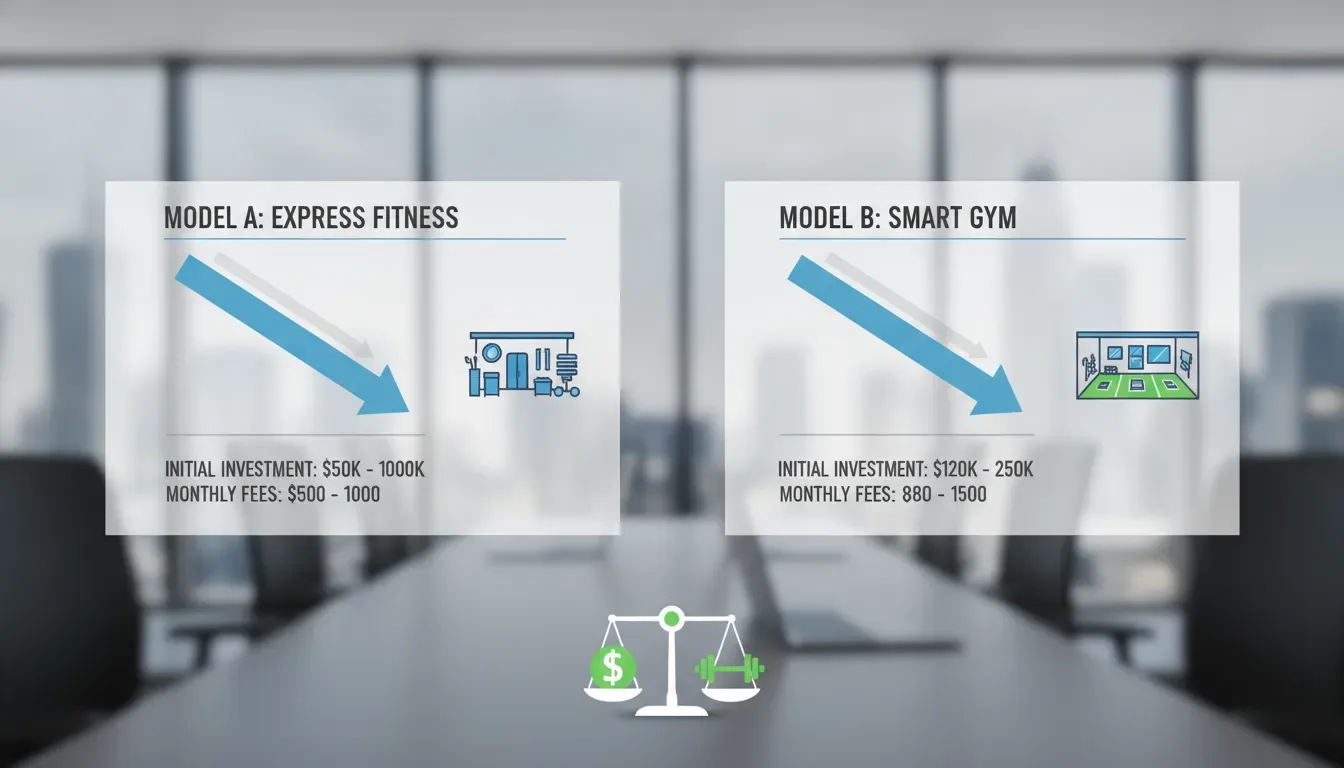
A fitness business doesn’t have to look like a giant gym filled with rows of machines. Low-cost gym franchises may focus on coached group classes, specialized training, mobile workouts, or compact facilities with flexible access. Those models can reduce some opening expenses, but they also shape who you can serve, how many members you can accommodate, and what it takes to keep the business running. The key is to look past the initial price and assess the whole operation. We’ll explore common franchise models, ongoing costs, local demand, and the questions to ask franchisees, so you can judge whether an opportunity makes sense for your finances and community.
Key Takeaways
- Compare the complete cost of each gym model: Include the franchise fee, location, equipment, staffing, ongoing fees, and working capital.
- Test your business plan against local realities: Research customer demand, competitors, pricing, operating expenses, and how many members you may need to cover costs.
- Verify the opportunity before investing: Review the FDD and agreement, get current quotes, and speak with franchisees. 10 Fitness can inform your member-experience comparisons, but it is not a franchise opportunity.
What Makes a Gym Franchise Low-Cost?
Compare lean models with full-service gyms
A gym franchise may cost less to open when it needs less space, equipment, or staff. Dance and group fitness classes, mobile personal training, and compact studios can have a lower initial investment than a full-service gym with extensive equipment, locker rooms, and long operating hours. But a smaller setup also shapes what you can offer and how many people you can serve at once.
Reported startup costs vary widely. Some mobile and group fitness concepts list entry costs below $5,000, while traditional big-box gyms can require hundreds of thousands of dollars or more. These figures are starting points, not promises. Compare what each estimate covers, and use published fitness franchise cost ranges as a prompt to ask franchisors for current, itemized numbers.
See why lower entry costs don’t always mean lower risk
The franchise fee is only one part of the opening budget. Equipment, insurance, permits, marketing, lease deposits, and working capital can add substantially to the total. Some costs continue after opening, too, so plan for the possibility that membership revenue takes time to build. Ask which expenses are required, which are optional, and whether estimates vary by location.
Consider how the model earns revenue as well as what it costs to launch. A mobile trainer may avoid a gym lease but needs to attract and retain clients while managing travel time. A small studio may spend less on equipment, yet class capacity depends on schedules and instructor availability. Reviewing common low-cost franchise cost pitfalls can help you look beyond the advertised entry price.
Use 10 Fitness as a value-focused benchmark, not a franchise option
When comparing concepts, look at the experience members receive for their money: convenient access, useful equipment, motivating classes, and a welcoming environment. These choices affect operating costs, staffing needs, and the kind of facility you’ll need. They also help you assess whether a concept fits the people in your community and their routines.
10 Fitness can serve as a reference point for member value, with a focus on comfort, supportive coaching, and options for different fitness levels. It is not a franchise opportunity, so don’t include it as one when comparing investments. More generally, brand recognition may help a business earn customer awareness, but it does not guarantee financial success. As you evaluate options, compare fitness franchise business models alongside costs, local demand, and the support a franchisor provides.
Which Low-Cost Gym Models Can You Compare?
Low-cost gym franchises can look very different from one another. Some focus on coached group classes, while others offer independent access or bring training directly to clients. Compare the full operating model, not just the advertised startup cost: space, equipment, staffing, schedule, and member experience all affect what it takes to run the business.
Dance and group fitness studios
Dance and group fitness studios center on instructor-led classes, which can mean less equipment and floor space than a full-service gym. In this model, class times, instructor quality, and the atmosphere can play a big role in attracting members and encouraging them to return.
Some franchise listings show starting costs below $5,000 for dance and group fitness concepts. Treat that as an advertised starting figure, not a complete opening budget. Ask what it includes, such as the franchise fee, lease, renovations, insurance, equipment, and working capital. This overview of gym franchise costs includes examples, but you’ll need current estimates directly from each franchisor. This model may appeal to people who enjoy working out with a group and prefer a scheduled class to planning a solo workout.
Circuit-training and boxing studios
Circuit-training and boxing studios offer coached sessions built around stations, rounds, or a planned workout. Members get structure and guidance, while owners can focus on a defined service instead of stocking a broad range of gym equipment. The trade-off is that class capacity, instructor availability, and the daily schedule can limit how many people the studio serves.
Before choosing a concept, ask how many members can attend each class, how many sessions you can run in a day, and what equipment and staff the franchise requires. Boxing studios may need specialty gear and a layout designed for safe movement. These details affect both the member experience and the studio’s earning potential. Consider whether local members are likely to attend at the times you plan to offer classes, including early mornings, evenings, and weekends.
Mobile personal training
Mobile personal training brings workouts to clients at home, outdoors, or another agreed location. Without a traditional gym floor to lease and furnish, this model may have fewer facility expenses. Some franchise listings advertise startup costs below $5,000 for mobile concepts, including GymGuyz, but the figure may not cover expenses such as equipment, a vehicle, insurance, or working capital. Review the franchise cost overview and confirm current, itemized estimates with the franchisor.
Think through the daily logistics before committing. How far will trainers travel between appointments? How many clients can they serve in a day? What happens when a client cancels? The model can suit people who value convenience and one-to-one coaching, but revenue depends on booking enough appointments and having qualified trainers available.
Compact studios and 24/7 gyms
Compact studios focus on a particular service, such as stretching or kickboxing. By contrast, 24/7 gyms let members work out independently at flexible hours. Both may use less space than a large, full-service club, but their equipment, staffing, and operating needs differ. A specialized studio may depend on coaches and scheduled sessions; an always-open gym needs reliable access controls, cleaning, maintenance, and security procedures.
Examples include Stretch Zone and 9Round, as well as 24/7 concepts like Snap Fitness and Anytime Fitness. A gym franchise overview lists examples across these models. Compare what each location needs to open and operate, including any specialty equipment or technology. If members can enter when staff are not present, ask how the franchise handles safety concerns and member support outside staffed hours.
Compare each model’s audience, services, and revenue
Start with the people you expect to serve. A group class concept may appeal to members who like coaching and shared workouts; a 24/7 gym may suit people with changing schedules. Mobile training can serve clients who want workouts at home, while a specialty studio attracts people seeking a particular service. Check local demographics, nearby competitors, commuting patterns, and likely demand before settling on an audience or location.
Then estimate how each model could earn revenue. Consider membership or session pricing, class and appointment capacity, staffing, and member retention. Ask the franchisor what support it provides for site selection, training, equipment, and membership software. The fitness franchise guide from ClassPass highlights local demand analysis and franchisor support as factors to weigh. Use your own local research to test the franchise’s estimates, rather than assuming its projections will match your market.
What Startup Costs Should You Expect?
A low franchise fee can make a gym look affordable, but it’s only one piece of the opening budget. Before comparing opportunities, estimate what it will take to prepare the space, open the doors, and cover bills while membership grows. Ask each franchisor for current figures and a clear breakdown.
Compare total investment ranges, not just franchise fees
A franchise fee may cover brand access, training, or operating resources, but it doesn’t represent the full cost of opening. Review the total initial investment in Item 7 of the Franchise Disclosure Document (FDD), along with the fee details in Item 6. Compare the low and high estimates, then check the assumptions behind them, such as location size, construction needs, and equipment choices.
The TZ Fit cost overview highlights a major expense to investigate: preparing an unfinished rental space can cost more than the equipment. Request estimates for a location similar to the one you’re considering, and ask when the figures were last updated. This gives you a more useful comparison than franchise fees alone.
Budget for equipment, leases, build-outs, insurance, and professional fees
Make a list of the costs required to open your specific type of gym. Equipment might include weights, cardio machines, flooring, lockers, and access-control systems. A lease may involve a deposit, rent before opening, and tenant improvements such as bathrooms, mirrors, lighting, and ventilation. Also account for insurance, permits, signs, initial supplies, and legal or accounting advice.
Costs vary with the space and the services you plan to offer, so get local quotes wherever possible. The low-cost franchise cost guide flags expenses such as supplies and marketing that may sit outside the franchise fee. Ask whether equipment delivery and installation, construction, and required technology are included in the estimate.
Include pre-opening marketing and working capital
Your budget should cover the weeks or months before the gym earns steady membership revenue. Plan for pre-opening promotions, a website or booking system, launch events, and local outreach. You may also need to pay staff for training before opening day, as well as cover rent and utilities during construction.
Working capital helps pay ongoing bills while you build your membership base. Estimate payroll, software, loan payments, supplies, and other monthly costs, then set aside funds in case membership grows more slowly than expected. The Franchise Creator gym guide notes that franchise fees vary by concept and support. Compare that fee with your full cash needs, including the months after opening.
Check what each estimate includes and excludes
Read every estimate carefully and ask the franchisor to clarify unclear items. Does the figure include lease deposits, construction, equipment delivery, staff training, opening marketing, and initial supplies? Does it assume you’ll build a new location or take over an existing gym? Confirm that the estimate reflects local costs and learn when it was prepared.
Also ask what support the franchise provides for site selection, staff training, equipment choices, and membership software. ClassPass’s overview of fitness franchise support describes services some franchisors may offer, though support varies by brand. Get answers in writing, then talk with current and former franchisees about their actual opening costs and day-to-day expenses. Their experience can help you identify gaps in the estimate before you commit.
What Ongoing Costs Shape a Gym’s Finances?
Plan for rent, utilities, payroll, maintenance, and software
Rent is often one of a gym’s largest ongoing costs, but choosing the lowest-priced space doesn’t always save money. A location that’s difficult to reach or has little visibility may attract fewer members, leaving you with less revenue and more pressure to spend on marketing. Compare rent with access, parking, nearby businesses, and demand from your target audience. RDX’s gym location guide offers useful factors to weigh when assessing a potential site.
Remember to budget for utilities, payroll, cleaning, insurance, software, and equipment repairs, too. Some expenses rise with usage: longer hours can increase utility bills, and frequent equipment use can lead to more maintenance. Set aside money for unexpected repairs so one broken treadmill or plumbing issue doesn’t throw off your monthly cash flow.
Account for royalties, brand marketing, and required purchases
Franchise costs may continue well beyond opening day. Your agreement could require royalties based on gross revenue or a fixed fee, along with contributions to a national or regional marketing fund. These payments may be due even when sales are slow, so include them in your monthly forecast rather than treating them as occasional expenses.
Check whether the franchisor also requires you to buy specific equipment, software, signage, or uniforms. These rules can limit your ability to shop around for lower prices. ClassPass’s overview of fitness franchise models explains common fee structures, but each franchise sets its own terms. Review the current cost estimates and franchise agreement, and ask which payments and purchases are mandatory before you commit.
See how staffing, equipment, and access hours affect overhead
Your staffing plan depends on the services you offer and the hours members can use the gym. A studio centered on instructor-led classes needs qualified instructors and a schedule that suits its audience. A 24/7 gym may need fewer employees on site overnight, but it still needs reliable entry systems, security, cleaning, and a way to support members.
Equipment also brings ongoing costs, from inspections and repairs to replacement parts and eventual upgrades. List the staff, equipment, and systems required to operate your concept, then estimate their costs across your planned hours. Franchise Creator’s staffing guidance highlights the value of clear staffing systems. Planning these details helps you compare business models based on daily operating needs, not just initial investment.
Match expenses to revenue streams
Build your budget around realistic ways to earn revenue. A traditional gym may rely mainly on memberships, while a boutique studio could add income from class packs, personal training, or specialty programs. Each service has costs of its own, such as instructor pay, booking software, or additional equipment. Estimate sales using local demand, your planned prices, and likely attendance, rather than assuming every class or membership will sell.
Research can help you check whether your services fit the area. ClassPass recommends evaluating local demand by looking at factors such as demographics, competing gyms, and commuting patterns. Compare expected revenue with fixed expenses, then test what happens if membership grows more slowly than planned. If the budget only works under ideal conditions, consider adjusting your costs or business model before signing a lease.
Is There Local Demand for Your Gym Concept?
A promising gym concept still needs a community that wants it, can afford it, and can reach it regularly. Before committing to a location, study the people nearby, the fitness options they already use, and the practical costs of operating there. Use what you learn to shape your services, pricing, and membership targets.
Assess local demographics, income, and fitness preferences
Start with the people your gym is meant to serve. Research the ages, household incomes, work patterns, and fitness habits of residents and employees near potential sites. Then consider whether your model fits their routines and budgets. A group fitness studio, for example, may appeal to people looking for scheduled classes, while a 24/7 gym may suit members who need flexible hours.
Go beyond online research by asking local residents what they want from a gym. Find out which activities they enjoy, what they pay now, and what would encourage them to try a new facility. Snap Fitness’s location guidance also recommends using demographic and fitness preference research to inform your site and services. Treat those findings as a starting point, then validate them through conversations and small trial events.
Check population density, nearby gyms, and market saturation
Map gyms, studios, recreation centers, and other fitness options within a realistic travel distance. Compare their prices, hours, equipment, class schedules, and target audiences. Competitors can signal that people in the area already spend on fitness, but you’ll need a clear reason for them to choose your concept, such as convenient hours, beginner-friendly coaching, or a distinct training style.
Check population density and commuting patterns, too. A site near homes, workplaces, transit, or regular errands may be easier to visit than one that requires a separate trip. Fitness market analysis can help you assess demographic fit, competition, and access. Visit nearby gyms at different times, and note class availability, busy equipment areas, and member traffic. These observations can reveal where existing options may not meet local needs.
Compare site access, parking, and lease costs
Convenience can shape whether someone visits once or makes the gym part of a weekly routine. Test travel times from nearby homes and workplaces, check public transportation, and see how easy parking is during morning and evening peaks. Visit the site on weekdays and weekends, since traffic and access can vary by time of day.
Compare lease costs across several neighborhoods before choosing a location. A high-traffic area may offer visibility, but rent can strain cash flow while membership grows. Include utilities, shared building charges, signage, and any repairs or renovations in your comparison. Snap Fitness’s site selection advice highlights parking and transit access as practical factors for prospective members. Weigh these conveniences against the full cost of the space, not just the advertised rent.
Estimate membership demand and retention
Estimate how many people in your service area are likely to join and can afford your membership price. Set a conservative enrollment target, then check whether your space, equipment, class schedule, and staffing can support it. Work out how many members you need to cover monthly expenses, and plan for a slower sign-up period than you hope for.
Also consider what will keep people coming back. Members may value reliable equipment, clean facilities, approachable staff, convenient hours, or classes that fit their goals. Ask prospective members what matters most, and use trial workouts or introductory events to test interest before making large commitments. Regional gym space demand research points to demographics and public health needs as factors that shape demand. Local feedback will help you determine whether those broader patterns apply to your concept.
What Are the Financial Trade-Offs?
Weigh lower startup costs against capacity and service limits
A smaller gym can cost less to open than a full-service facility, but it may also have less room for members, equipment, and services. A compact studio, for example, might keep rent and setup costs manageable while offering fewer class times or amenities. That can limit the number of members you can serve and the revenue you can earn.
Compare the total investment with the experience your gym will offer. Look beyond the franchise fee to expenses such as equipment, construction, and lease costs. Gym startup cost estimates vary by model, so check what each estimate includes. Then ask whether the space, schedule, and services can support your membership goals without stretching your budget.
Consider revenue, retention, and time to break even
Revenue might come from memberships, personal training, classes, or other services. To estimate whether the numbers can work, consider what local customers may pay, how many members your space can serve, and how often they are likely to return. A gym may take longer to break even if membership grows slowly or customers leave before recurring revenue can cover expenses.
Research nearby gyms, local demographics, commuting patterns, and fitness preferences before setting your projections. Fitness franchise market research can help you assess whether your concept and pricing suit the area. Build a conservative forecast, including a slower membership ramp-up than you hope for, and make sure you have enough working capital to manage that period.
Factor in owner workload, staffing, and marketing
A lean business model can still ask a lot of its owner. A 24/7 gym may need reliable access systems, cleaning, and equipment maintenance. A class-based studio may depend on instructors, a consistent schedule, and ongoing efforts to fill classes. Include payroll, software, repairs, and local marketing in your budget, as well as the time you’ll spend managing daily operations.
Franchise support may cover areas such as site selection, staff training, equipment guidance, and membership technology. Confirm what the franchisor provides, whether it costs extra, and what responsibilities remain yours. Also consider how you’ll reach potential members and keep current ones engaged. These details affect both your cash flow and whether the business fits your lifestyle.
Remember: low startup costs or a familiar brand don’t guarantee success
A lower initial investment may feel like a safer choice, and a familiar brand can help potential members recognize your gym. Neither guarantees enough sign-ups, steady revenue, or a quick path to profitability. Results depend on local demand, operating expenses, member experience, and how well you manage the business.
Review the assumptions behind any earnings projections, and test what happens if membership grows more slowly than expected or expenses rise. Ask franchisees about their actual costs and day-to-day workload, not just their opening experience. Franchise research can help you assess the market, but your own financial plan should reflect the specific location and model you’re considering. Make the decision based on realistic numbers and responsibilities, not the brand name alone.
How Do You Evaluate a Franchise Before Investing?
Buying into a gym franchise is a major financial and personal commitment. The initial franchise fee is only one part of the decision: you’ll also need to understand the cost of preparing a location, hiring staff, attracting members, and keeping the business running while it grows. A familiar brand or polished sales presentation can make an opportunity feel straightforward, but your decision should rest on the written terms and realistic local numbers.
Start by reviewing the Franchise Disclosure Document (FDD), then compare its estimates with current quotes and conversations with franchisees. Ask what support the franchisor provides and what you’ll be expected to manage yourself. Just as importantly, look at whether the concept fits the people and fitness habits in your chosen area.
Before signing, build a cash-flow plan that accounts for a slower opening period and unexpected expenses. If the numbers only work when membership grows quickly, take another look at the assumptions. Careful research won’t remove every risk, but it can help you understand the commitment, ask clearer questions, and decide whether the franchise is a good fit for your goals.
Review the Franchise Disclosure Document and current cost estimates
Request the FDD early and review it with a franchise attorney or accountant. Focus on Item 7, which lists estimated initial investment, and Item 6, which outlines fees. Check what each estimate includes, when it was prepared, and whether it reflects conditions in your market. A space that needs new flooring, mirrors, showers, or other improvements can add considerably to the cost of equipment.
Then gather current quotes from contractors, equipment vendors, insurers, and landlords. Compare these with the FDD instead of treating its estimates as a location-specific budget. The FTC’s franchise buying guide explains what to look for in disclosure materials and how to assess an offer. Ask the franchisor to clarify any estimate that seems unclear or incomplete.
Verify royalties, required spending, and contract terms
Look beyond the initial franchise fee to understand the ongoing cost of operating under the brand. Check the FDD for royalties, advertising contributions, technology charges, required purchases, and minimum spending obligations. Fee structures vary, so use the franchise’s own documents rather than assuming that a typical industry rate applies. An overview of gym franchise costs can help you prepare questions, but the FDD should guide your budget.
Review the agreement for its term, renewal conditions, territory protections, transfer rules, and requirements for ending the relationship. Ask whether fees still apply when revenue is low and whether the franchisor can change approved suppliers or systems. Have a qualified franchise attorney explain any terms you don’t understand before you sign.
Compare training, site selection, marketing, and ongoing support
Find out what the franchisor’s training covers, how long it lasts, and whether it includes sales, member service, safety, and staff management. Ask who helps assess locations and whether you’ll receive guidance with lease negotiations, permits, and opening plans. Clarify which marketing resources are included and what local promotion you’ll need to fund yourself.
Support matters after opening, too. Ask how the franchisor handles operational questions, provides membership-management tools, and shares updates to equipment or business practices. Fitness franchises may offer services such as training, site-selection guidance, equipment specifications, and membership technology, but the details differ by brand. Reviewing fitness franchise support models can help you identify useful questions. Request a written outline of the support you can expect and compare it with the fees you’ll pay.
Ask current and former franchisees about costs and daily operations
The franchisor can describe the business model, while franchisees can share what it takes to run it day to day. Use the FDD’s contact information to speak with both current and former owners. Ask how their opening costs compared with the estimates, how long it took to build membership, and which expenses caught them off guard. Questions about staffing, equipment repairs, marketing, and owner hours can give you a clearer picture of the work involved.
Talk with several owners, ideally in markets similar to yours. Former franchisees may be able to explain why they left and how contract terms worked in practice. Their experiences won’t predict your results, but they can reveal patterns in costs and support. Franchisee feedback and turnover can offer useful context as you weigh what you hear.
Stress-test financing and cash flow if membership grows slowly
Create a conservative cash-flow forecast before choosing a location or taking on debt. Include fixed expenses such as rent, utilities, loan payments, insurance, and software, along with variable costs such as payroll and equipment maintenance. Model more than one membership scenario, including a slower ramp-up than the franchisor projects. Check whether the business can cover its bills while it builds awareness and earns repeat visits.
Research local demographics, nearby gyms, commuting patterns, and the fitness services people in the area want. These details can help you estimate likely demand and pricing without assuming the gym will fill quickly. Market analysis for fitness franchises can help frame that research. Before committing, estimate your working-capital needs, confirm financing payments, and decide how long you can cover a shortfall.
Related Articles
- Cheapest Gym Franchise: 10 Low-Cost Fitness Franchises to Consider
- Navigating the World of Low-Cost Franchises: Common Pitfalls to Avoid
- Fitness Franchises: How to Choose the Right Model for Your Market
- How to Franchise a Gym: Complete 2026 Guide
- Perfect Location: Start a Snap Fitness Gym Franchise
Frequently Asked Questions
What is the cheapest type of gym franchise to start?
Mobile personal training and some group fitness concepts often advertise lower starting costs because they may need less space and equipment. Check the full investment estimate before comparing options, since advertised entry costs may not include insurance, marketing, working capital, or other expenses.
How much does it cost to open a gym franchise?
Costs vary based on the franchise, location, facility size, equipment, and construction needs. Review the FDD’s estimated initial investment and request current, itemized figures from the franchisor. Local quotes can help you build a more realistic budget.
What ongoing costs should I include in a gym franchise budget?
Plan for expenses such as rent, utilities, payroll, insurance, repairs, software, royalties, and marketing contributions. Your staffing and equipment needs will also depend on whether you run classes, offer personal training, or provide independent gym access.
How can I tell whether a gym franchise will suit my area?
Research nearby gyms, local fitness preferences, household budgets, population density, and access to potential locations. Speak with prospective members and franchisees, then compare likely demand with your planned prices, capacity, and monthly costs.
Is 10 Fitness a gym franchise opportunity?
No. 10 Fitness is not a franchise opportunity. You can use its focus on welcoming facilities and member experience as a point of comparison when assessing what customers may value in a gym.